English
 German
 Hungarian
 Dutch
Dutch
 Spanish
 French
 Italian
 Czech
Czech
 Polish
 Greek
Greek
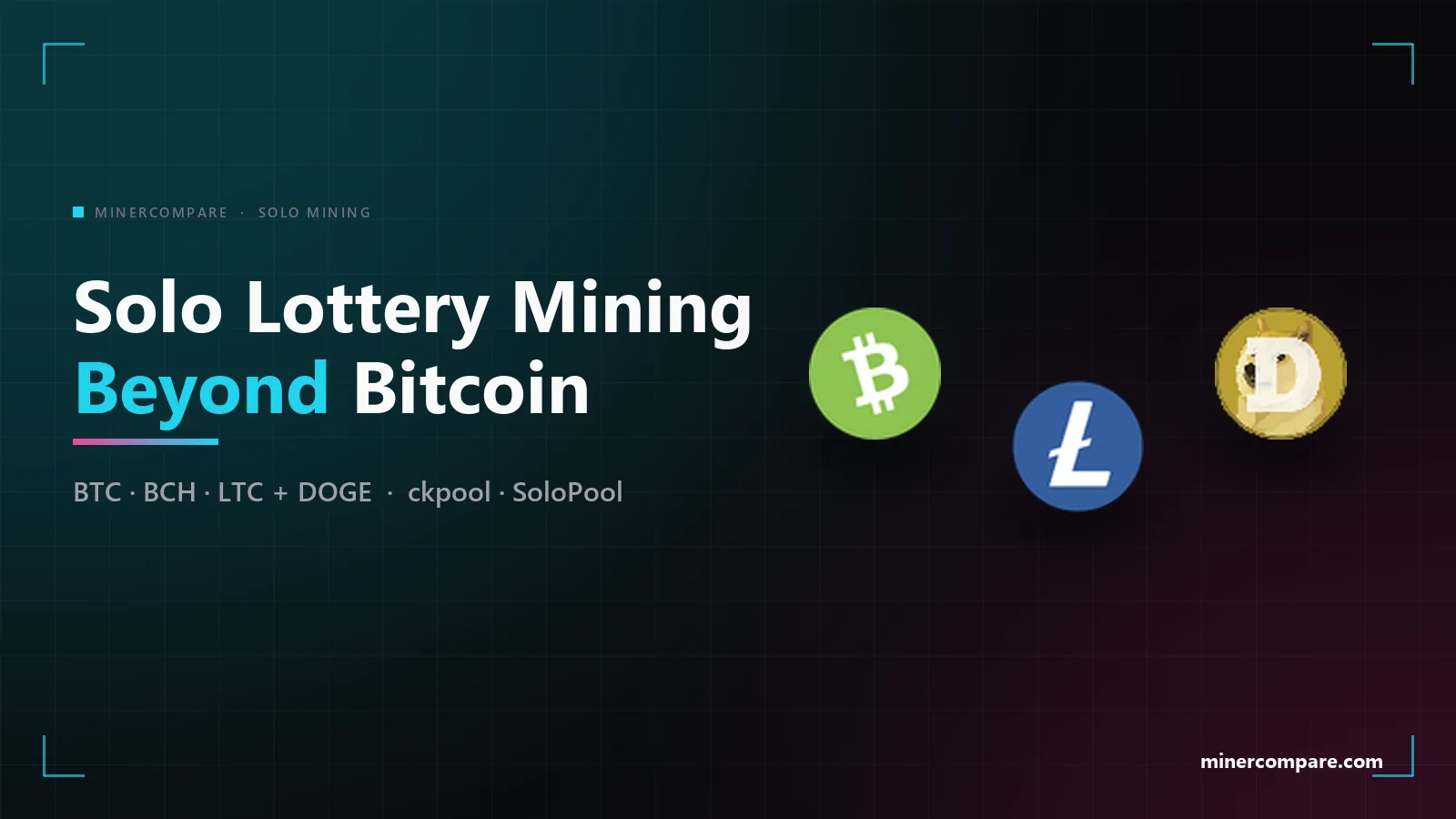
A solo lottery miner is usually sold as a Bitcoin machine, but the chip inside does not care which chain it hashes for. A SHA-256 miner can play the Bitcoin lottery or the Bitcoin Cash lottery, and a Scrypt miner plays the Litecoin and the Dogecoin lottery at the same time from the same hashes. This guide explains what that choice means for your odds and your prize, which desk miners fit which chain, how to pick a low difficulty solo mining pool, and how to set the whole thing up step by step, from wallet address to first accepted share.
One miner, more than one lottery
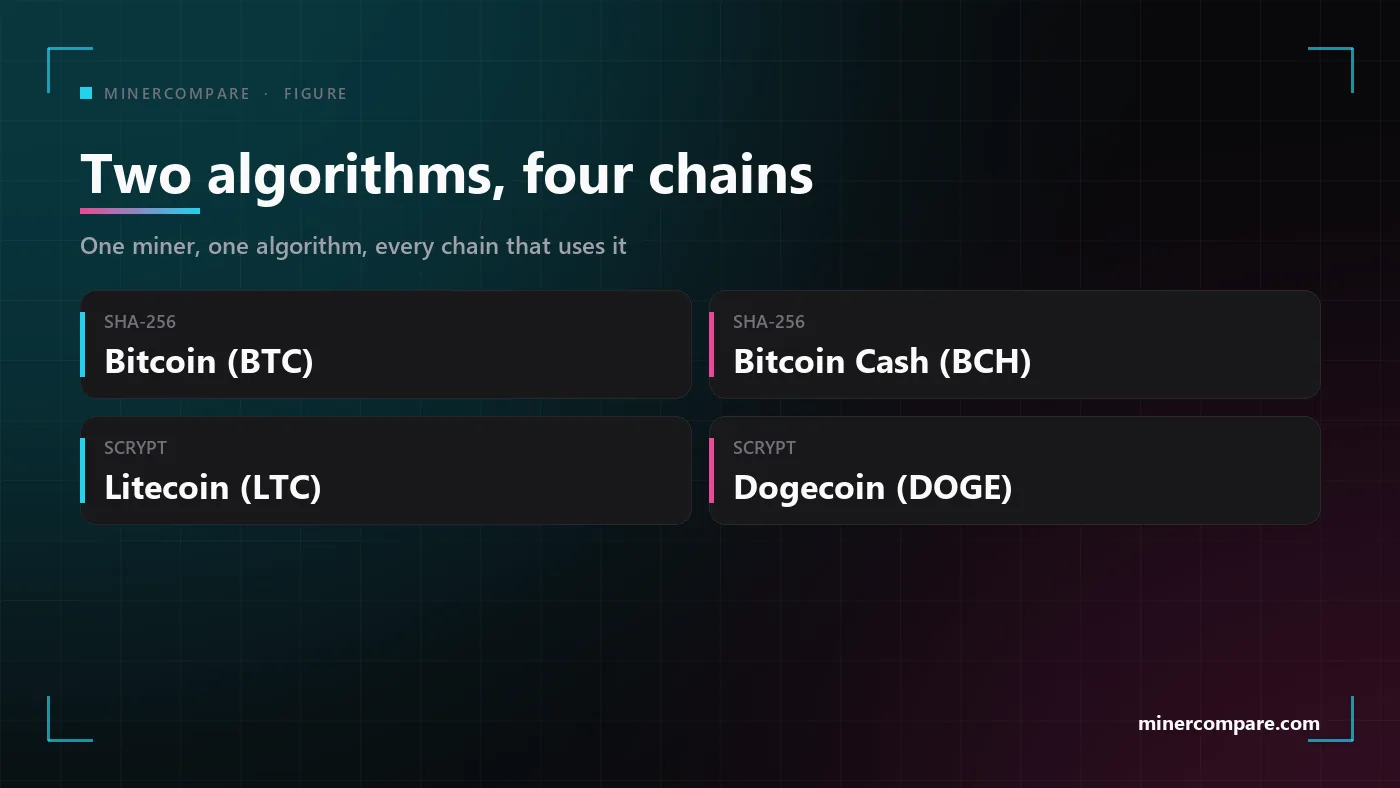
An algorithm is not a coin. SHA-256 is the hash function Bitcoin uses, and it is also the one Bitcoin Cash uses, because Bitcoin Cash split from Bitcoin in 2017 and kept the proof of work. Scrypt is the function Litecoin launched with, and Dogecoin adopted it so that Litecoin miners could secure it too. Any miner built for one of these algorithms produces hashes that are valid work on every chain that uses it.
On SHA-256 you pick a chain; on Scrypt you get both. Bitcoin and Bitcoin Cash are separate chains with separate block templates, so a SHA-256 miner works on one of them at a time and you choose by choosing the pool. Litecoin and Dogecoin are different: since 2014 Dogecoin accepts Litecoin work through auxiliary proof of work, so a merged-mining pool hands your Scrypt miner a Litecoin template that also commits to a Dogecoin block. Every hash is checked against both targets.
That makes dual solo mining two independent lotteries from one ticket: a hash that clears the Dogecoin target wins a Dogecoin block, a hash that clears the Litecoin target wins a Litecoin block, and on a very good day one hash clears both.
| Algorithm | Chains | Lotteries per hash | How you choose |
|---|---|---|---|
| SHA-256 | Bitcoin (BTC) · Bitcoin Cash (BCH) | 1 | The pool you point the miner at |
| Scrypt | Litecoin (LTC) + Dogecoin (DOGE) | 2 | A merged-mining pool plays both automatically |
Difficulty against block value
Choosing a chain is choosing between shorter odds and a bigger prize. Your chance of finding a block is your hashrate divided by the chain's network hashrate, multiplied by the number of blocks the chain produces in the period you care about. Bitcoin has by far the largest network, so the odds are longest and the block is worth most. Bitcoin Cash runs the same algorithm with a small fraction of the hashrate, so the same miner clears its target far more often, but the block pays in a coin that trades at a fraction of Bitcoin's price.
On Scrypt the trade-off is built in. Dogecoin produces a block every minute against Litecoin's two and a half, and its difficulty is set separately, so the Dogecoin lottery pays out more often and the Litecoin lottery pays a block that is worth more per hit. Because you play both with the same hashes, there is nothing to choose here; the only decision is to use a pool that actually pays both chains.
The live figures for every chain, including network hashrate, difficulty and the current block reward, are on the coin pages, and the solo panel on each coin page converts your hashrate into odds per day, month and year. Bitcoin coin page · Bitcoin Cash coin page · Litecoin coin page · Dogecoin coin page
Which solo miner for which chain
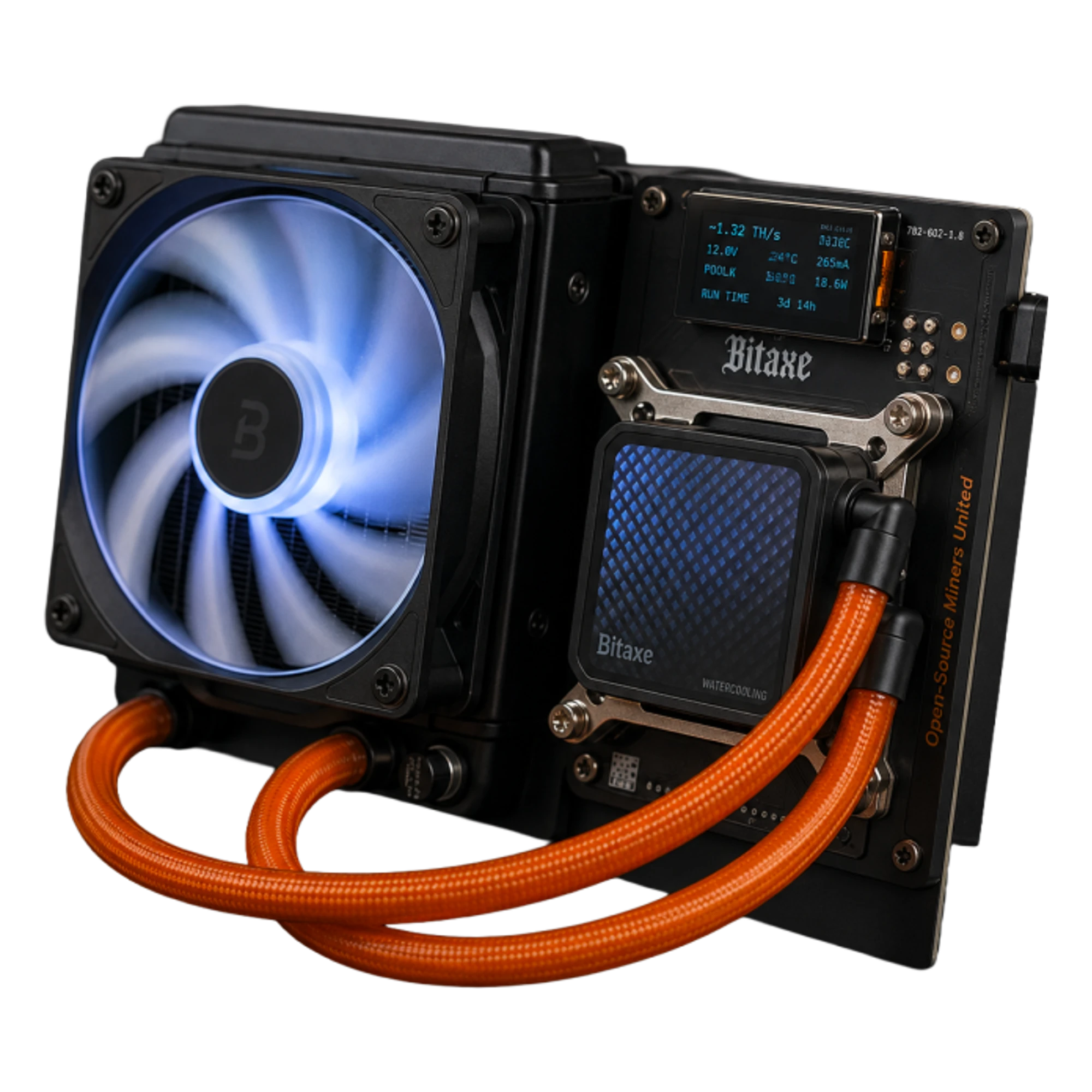
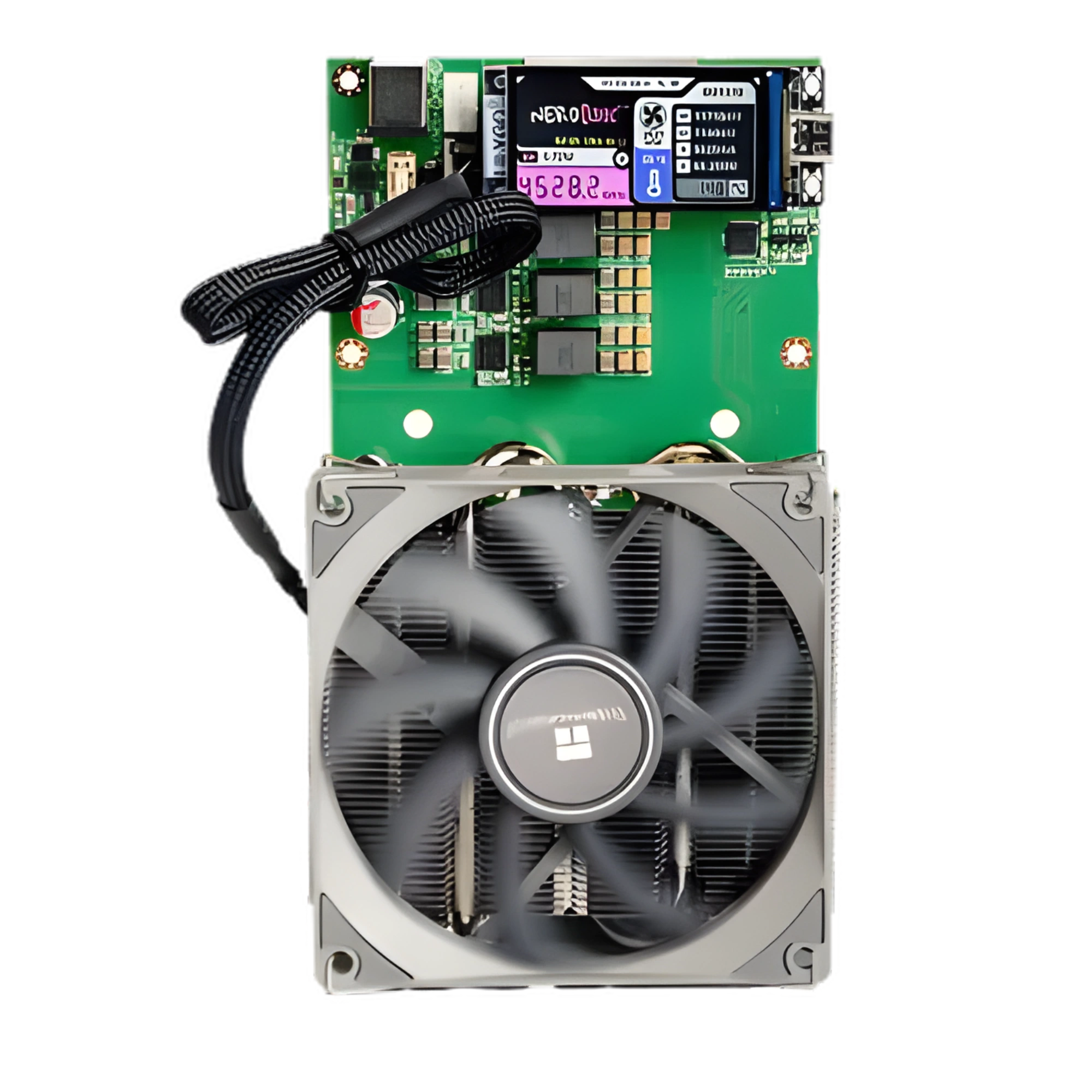
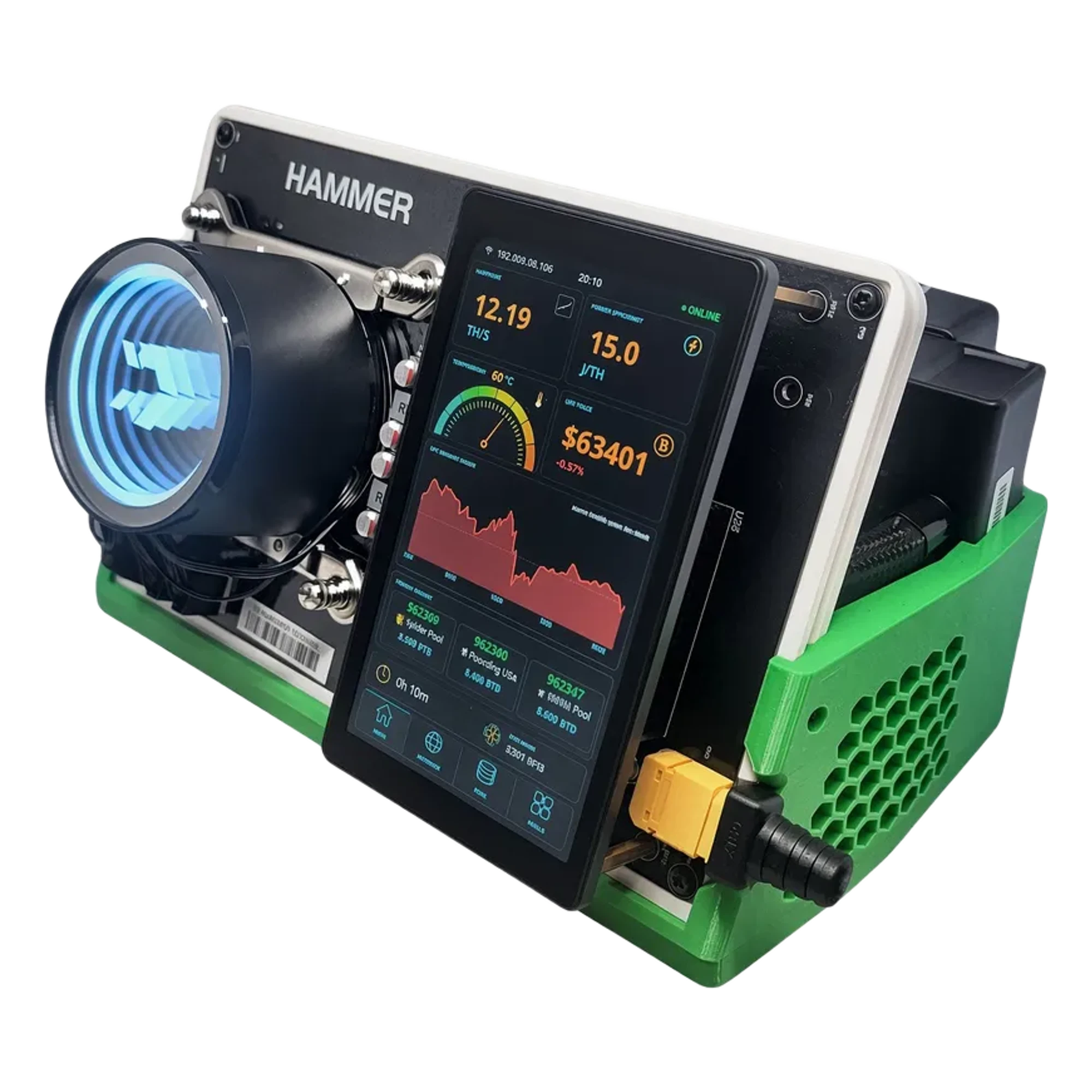
The algorithm of the miner decides the chains, and nothing else does. Every Bitaxe, NerdQaxe, Lucky Miner and HammerMiner BC series machine is a SHA-256 miner, so it can play Bitcoin or Bitcoin Cash. The HammerMiner DC series and the PlebSource Scrypt board are Scrypt miners, so they play Litecoin and Dogecoin together. Both tables below are live: they are computed when the page loads from the current network figures of each chain, so the odds you see are today's, not the day we wrote this.
SHA-256 solo miners: Bitcoin or Bitcoin Cash
| Miner | Hashrate | Power | BCH odds per day | BTC odds per day |
|---|---|---|---|---|
| NerdMiner NerdOCTAxe Rev 3.1 (12TH) | 12TH/s | 240W | 1 in 2.17K 1 in 6.5 / year | 1 in 550K 1 in 1.51K / year |
| HammerMiner BC08 (12TH) | 12TH/s | 250W | 1 in 2.17K 1 in 6.5 / year | 1 in 550K 1 in 1.51K / year |
| NerdMiner NerdOCTAxe (9.6TH) | 9.6TH/s | 160W | 1 in 2.71K 1 in 7.9 / year | 1 in 687K 1 in 1.88K / year |
| Bitaxe Gamma Hex (8.4TH) | 8.4TH/s | 140W | 1 in 3.1K 1 in 9 / year | 1 in 785K 1 in 2.15K / year |
| NerdMiner NerdQX (8TH) | 8TH/s | 170W | 1 in 3.26K 1 in 9.4 / year | 1 in 825K 1 in 2.26K / year |
| HammerMiner Thor P2 (6.8TH) | 6.8TH/s | 155W | 1 in 3.83K 1 in 11 / year | 1 in 970K 1 in 2.66K / year |
| NerdMiner NerdQaxe Plus Plus Rev 6.1 (6TH) | 6TH/s | 103W | 1 in 4.34K 1 in 12 / year | 1 in 1.1M 1 in 3.01K / year |
| NerdMiner NerdQaxe Plus Plus Hydro Rev 6.1 (6TH) | 6TH/s | 103W | 1 in 4.34K 1 in 12 / year | 1 in 1.1M 1 in 3.01K / year |
Odds are 1 in N against the live network difficulty of each chain; the smaller figure under each is the odds per year. The colour of the Bitcoin column is the same daily-odds rating the solo page uses. See every solo miner with live odds →
Read the two odds columns side by side. The same machine clears the Bitcoin Cash target many times more often than the Bitcoin target, and that ratio is simply the ratio of the two network hashrates. Which of the two is the better ticket is a question about the prize, so look at the block value on each coin page before you pick a pool.
 Bitaxe Gamma Hex (8.4TH)
 NerdMiner NerdQaxe Plus Plus (4.8TH)
 HammerMiner BC08 (12TH)
Scrypt solo miners: Litecoin plus Dogecoin
| Miner | Hashrate | Power | DOGE odds per day | LTC odds per day |
|---|---|---|---|---|
| HammerMiner DC08 (440MH) | 440MH/s | 120W | 1 in 4.22K 1 in 12 / year | 1 in 11K 1 in 31 / year |
| HammerMiner DC06 (330MH) | 330MH/s | 120W | 1 in 5.63K 1 in 16 / year | 1 in 14.6K 1 in 41 / year |
| HammerMiner DC04 (230MH) | 230MH/s | 60W | 1 in 8.08K 1 in 23 / year | 1 in 21K 1 in 58 / year |
| HammerMiner DC02 (120MH) | 120MH/s | 30W | 1 in 15.5K 1 in 43 / year | 1 in 40.2K 1 in 111 / year |
| PlebSource Hammer Miner Scrypt (105MH) | 105MH/s | 25W | 1 in 17.7K 1 in 49 / year | 1 in 45.9K 1 in 126 / year |
On a merged-mining pool both columns apply at once to the same miner. The colour of the Litecoin column is the same daily-odds rating the solo page uses. See every solo miner with live odds →
The Scrypt desk miners are a smaller family than the Bitcoin ones, and the HammerMiner DC series covers most of the range on its own, from a board that draws about as much as a phone charger to one that needs a real fan.
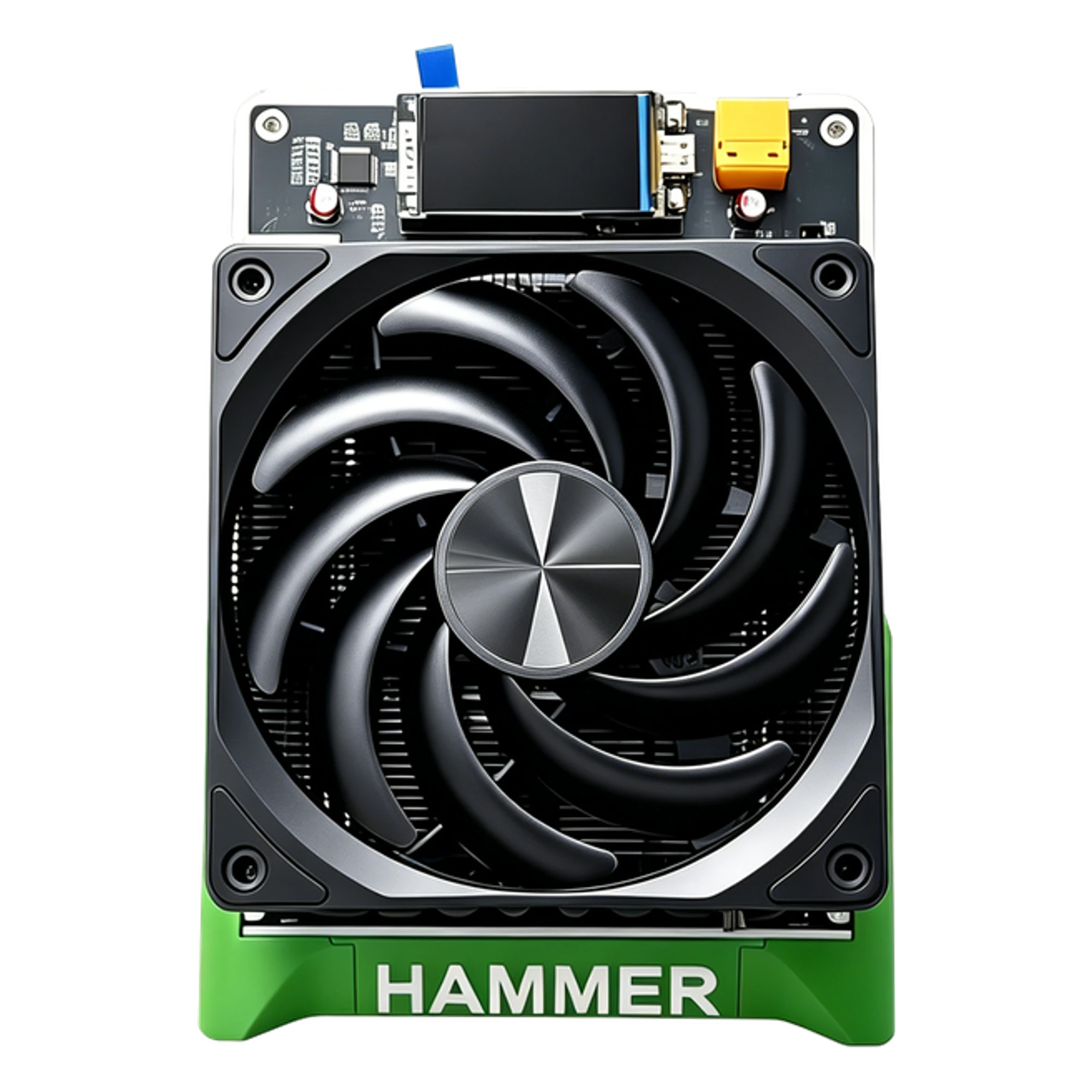 HammerMiner DC08 (440MH)
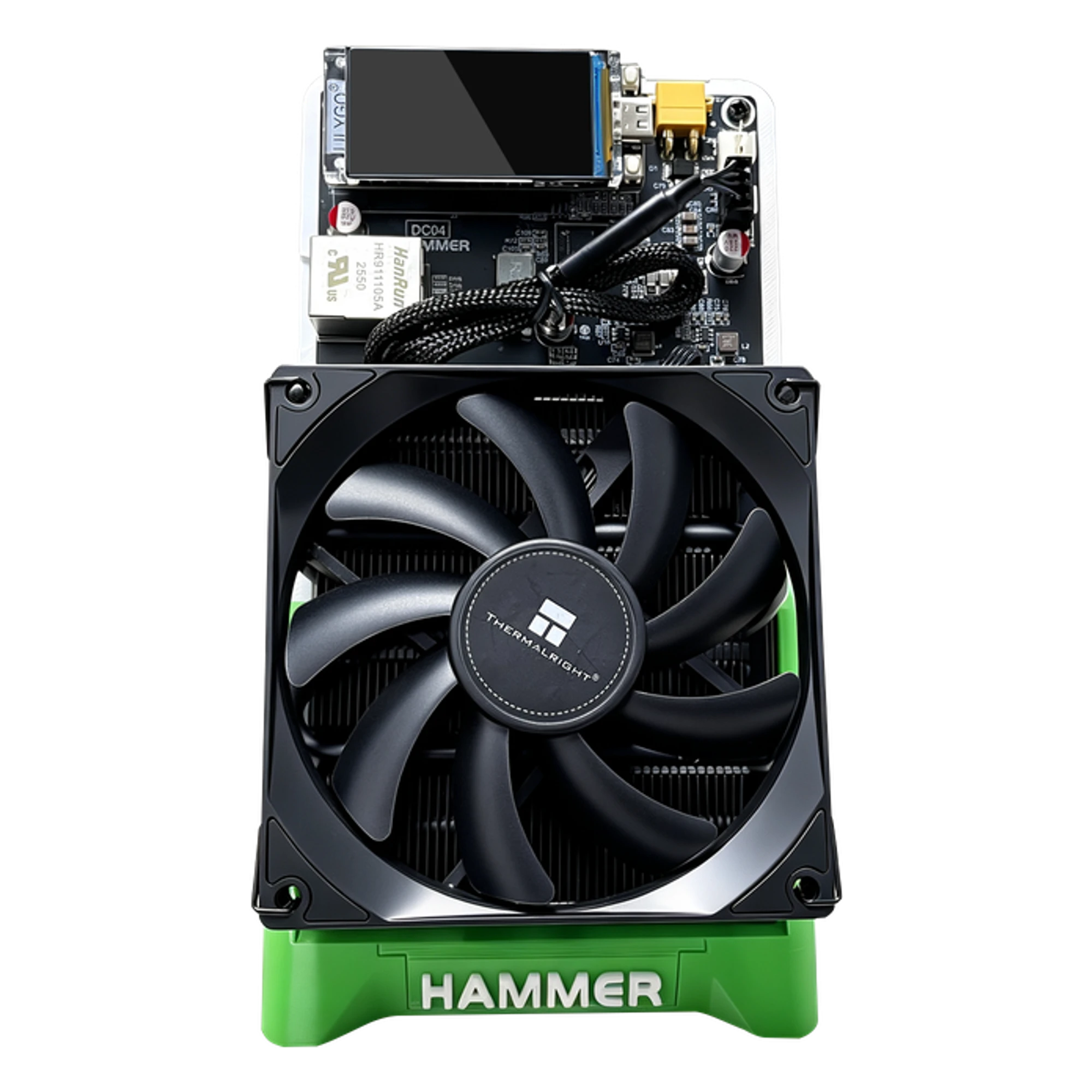 HammerMiner DC04 (230MH)
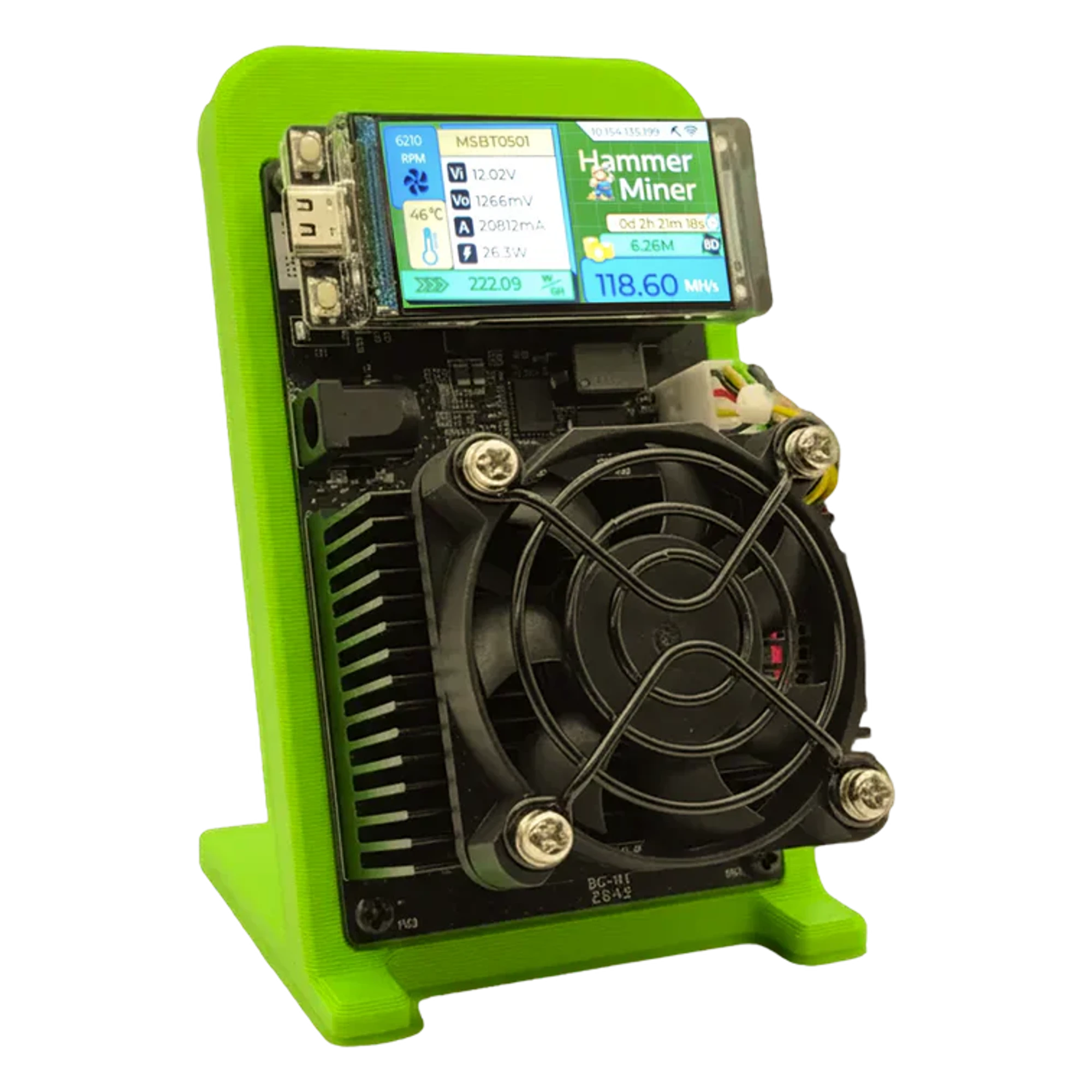 PlebSource Hammer Miner Scrypt (105MH)
The solo lottery page lists every lottery miner we track for both algorithms, rated by daily block odds, with your electricity rate applied as the yearly ticket price.
See every solo miner with live oddsChoosing a low difficulty solo mining pool
A solo pool does not share anything; it is a block template service. It gives your miner the current block to work on, collects the shares your miner sends back, and if one of those shares is a valid block it submits it to the network and pays the whole reward, minus its fee, to the address you mined with. There is no pool balance, no minimum payout and no account. That is why the username on a solo pool is your own address.
Low difficulty means share difficulty, and it is about your dashboard, not your odds. A pool asks your miner for shares above a certain difficulty so it can measure your hashrate. A big pool tuned for industrial machines sets that bar high, and a one-terahash desk miner may go hours without clearing it, which makes the dashboard show nothing and makes you wonder whether the miner is working. A pool that lets small miners submit at a low share difficulty shows accepted shares, a hashrate and a best share within minutes. Your chance of a block is unchanged either way: it depends on your hashrate and the network difficulty, and on nothing the pool sets.
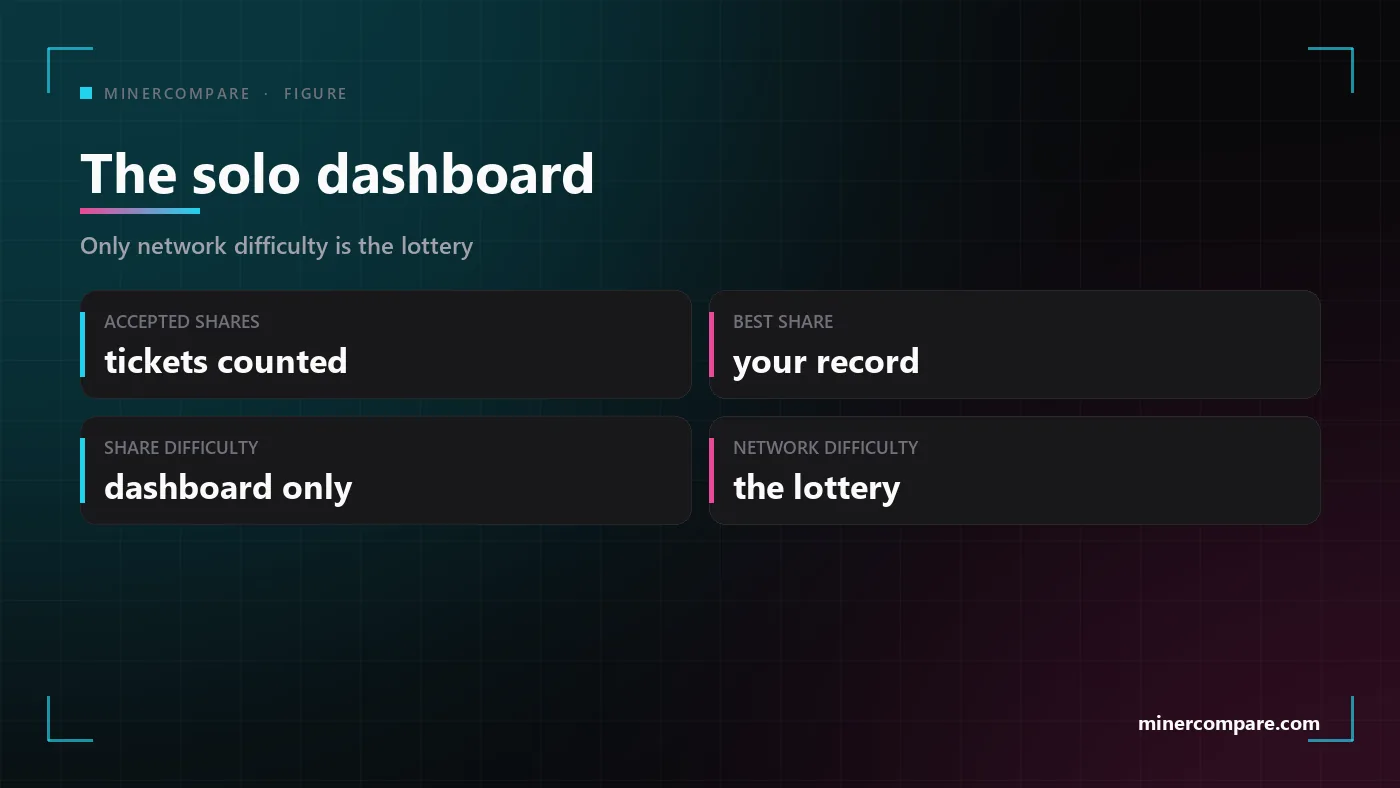
Share difficulty decides how often the pool hears from you. Network difficulty decides how often you win. Only the second one is the lottery.
Bitcoin: ckpool.org, and Atlas Pool as another option
For Bitcoin we recommend ckpool.org, the long-running solo pool at solo.ckpool.org. Your Bitcoin address is the username, with or without a worker suffix, any password is accepted, and a found block is paid directly to that address. The pool takes a two percent fee from a block and nothing otherwise. Its default minimum share difficulty is ten thousand, and miners whose firmware supports it can ask for a lower one, which the pool itself notes does not change the odds of finding a block.
stratum+tcp://stratum.ckpool.org:3333
stratum+tcp://stratum.ckpool.org:4334   (high difficulty, for rented hashrate)
stratum+tcp://stratum.ckpool.org:3336   (Stratum V2)
Atlas Pool at atlaspool.io is another Bitcoin solo pool worth considering; it describes itself as a globally deployed solo pool and publishes its connection details on its dashboard rather than on a help page, so take the host and port from there. solo.ckpool.org · atlaspool.io
Litecoin and Dogecoin: SoloPool.org for dual solo mining
For Scrypt we recommend SoloPool.org, because it offers low difficulty solo Scrypt mining and pays both chains. It runs a Litecoin pool and a Dogecoin pool as one merged-mining service: your Scrypt miner connects once, and a Litecoin block is paid to your Litecoin address while a Dogecoin block is paid to your Dogecoin address. The service is non-custodial, with no pool wallet and no balances, and charges a two percent solo fee. The stratum host and port, the difficulty options and the exact way to pass both addresses in the username are on its help pages, and those pages are the source to follow rather than this article.
Help pages with the stratum host, port and username format:
https://ltc.solopool.org/help
https://doge.solopool.org/help
ltc.solopool.org · doge.solopool.org
Bitcoin Cash: the same miner, a smaller lottery
Pointing a SHA-256 miner at Bitcoin Cash changes three things and nothing else. The network difficulty is far lower, so the same hashrate clears the target far more often; the block is worth far less, because the coin price is a fraction of Bitcoin's; and the address you mine to must be a Bitcoin Cash address, not a Bitcoin one. The miner, the firmware and the Stratum settings are identical. SoloPool.org runs a Bitcoin Cash solo pool alongside its Bitcoin one, and any other pool you consider should pass the same checklist.
- Solo mode, not a shared reward. The pool must pay the full block to the finder. A pool that pays a daily trickle is a normal pool, whatever it calls itself.
- Low share difficulty for small miners. Either a low default or an option to request one, so your dashboard shows shares within minutes.
- Payout to your own address, no account. Your address is the username and there is no balance to withdraw. If the pool asks you to register, keep looking.
- A published fee and a public block list. You should be able to see what the pool charges and which blocks it has found.
If pools in general are new to you, our pools guide explains payout schemes, fees and what a stratum connection is before you commit a miner to any of them. Crypto Mining Pools
Step-by-step setup
Every desk miner in this guide is configured from a web page, and the pool is the only place you type anything. There is no software to install and no account to create. The six steps below are the same for a Bitaxe on Bitcoin, a NerdQaxe on Bitcoin Cash and a HammerMiner DC on Litecoin plus Dogecoin; only the address type and the pool change.
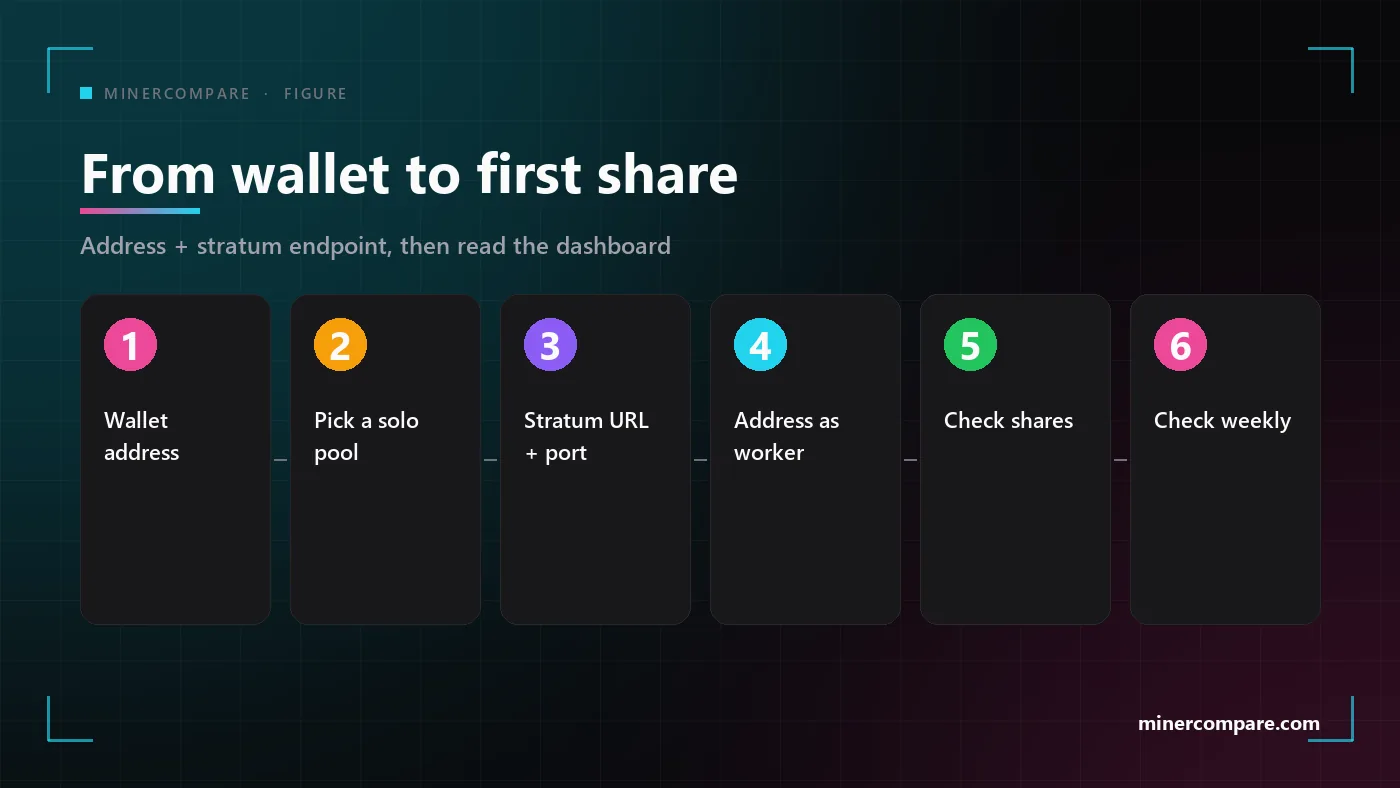
Get one receiving address per coin
Create a non-custodial wallet and back up its seed phrase. For Bitcoin or Bitcoin Cash you need one address; for Litecoin plus Dogecoin you need a Litecoin address and a Dogecoin address.
Pick a solo pool that matches the algorithm
SHA-256 miners go to a Bitcoin or Bitcoin Cash solo pool, Scrypt miners to a merged Litecoin and Dogecoin solo pool. Open the pool's help page and note the stratum host and port.
Enter the stratum URL and port in the miner
Open the miner's web page (AxeOS or the firmware your machine runs), go to the pool settings, and type the host and the port exactly as the help page lists them.
Use your address as the worker name
The username is your receiving address, optionally followed by a worker suffix. For merged mining follow the pool's format for passing the second address. Password: x, unless the help page says otherwise.
Check the shares on the pool dashboard
Within a few minutes the pool page for your address should show accepted shares, a hashrate and a best share. If it stays empty, the address or the port is wrong.
Leave it running and check once a week
A block can come on the first day or never. Keep the miner cool, watch for rejected shares, and compare the pool's hashrate with the miner's own figure now and then.
The address is the part that cannot be undone. A block is paid to whatever string you typed as the username. If that is a Bitcoin address on a Bitcoin Cash pool, a Dogecoin address in the Litecoin field, an exchange deposit address or a wallet you have since deleted, the block is lost. Copy the address from the wallet, paste it, and compare the first and last characters on the pool dashboard before you walk away.
Reading the pool dashboard
Accepted shares are proof of work, not proof of winning. Every share the dashboard counts is a hash that cleared the pool's share difficulty. It tells you the miner is online, that the pool is receiving its work, and roughly how fast it hashes. It says nothing about blocks, because a block is a hash that clears the network difficulty, which is many orders of magnitude harder. A miner can submit millions of shares and never find a block, and that is the expected outcome.
Best share is your personal record, and it is worth watching. The dashboard keeps the highest-difficulty share your miner has ever found. Compared with the current network difficulty it shows how close your luckiest hash came, and when the best share jumps it is a small reminder that every hash really is a draw. It still pays nothing; only a share above the network difficulty is a block.
When a block is found, the pool pays and you do nothing. The pool broadcasts the block, the network confirms it, and after the coin's maturity period the reward minus the pool fee appears at your address. On a merged pool a Dogecoin block arrives as Dogecoin and a Litecoin block as Litecoin. The pool's public block list shows the hit, and so does any block explorer for your address.
Mistakes that waste tickets
The electricity a solo miner draws is the price of its tickets, and most of the ways to lose are ways of paying for tickets that are never entered in the draw.
- The wrong address format. A Bitcoin address on a Bitcoin Cash pool, or a Litecoin address where the pool expects Dogecoin, means a found block is paid nowhere you can reach. Match the address type to the chain and check it on the dashboard.
- A Scrypt miner on a SHA-256 pool, or the reverse. Every share is rejected and the dashboard stays empty. Match the algorithm before anything else.
- Chasing a lower share difficulty. A lower share difficulty makes the dashboard update faster and does nothing to the odds. Once shares appear, stop tuning it.
- Expecting income. A solo miner that has run for a year with nothing to show is behaving exactly as the odds say. If a steady trickle is what you want, that is a normal pool, and the same machine can join one.
- Overclocking for a bigger number on the screen. Hardware errors are not valid shares. If the pool reports less hashrate than the miner does after a day, lower the frequency until the two agree.
- Forgetting it exists. A changed Wi-Fi password or a tripped power strip can keep a miner offline for months. The pool dashboard is the place to confirm it is still buying tickets.
Reading the odds on MinerCompare
Every solo miner on MinerCompare shows odds instead of profit. Open any miner page for a machine flagged as a solo miner and the hero shows the daily block chance in the rating colour, a solo analysis card with the odds per day, month and year, the block value, and your electricity cost at the rate you enter. The coins section lists each chain the miner's algorithm can play with its own network hashrate and odds, which for a Scrypt miner means Litecoin and Dogecoin side by side.
The solo lottery page is the comparison view. It lists every lottery miner for both algorithms, rated by daily odds against the live network, with the yearly electricity cost next to the block value. Use it to compare one bigger machine with several small ones, and switch the network tab to see the Scrypt family on its own.
If you are still choosing a Bitcoin desk miner, our earlier guide walks through the hashrate tiers and what each one draws from the wall; and if the question is really whether to spend the money on a graphics card instead, the GPU article is the honest comparison. Bitcoin Home Mining in 2026: How Solo Lottery Miners Work and Which One to Buy · Is GPU mining back in 2026? · SHA-256 miners · Scrypt miners · Buying an ASIC Miner
Bottom line
Match the algorithm, choose the chain, use your own address, and let the pool do the rest. A SHA-256 desk miner plays Bitcoin for the biggest prize or Bitcoin Cash for shorter odds on a smaller one, and the switch is a different pool and a different address. A Scrypt desk miner on a merged pool plays Litecoin and Dogecoin at once with no decision to make. In every case the pool's share difficulty is about your dashboard and the network difficulty is the lottery.
Set it up once, confirm the shares and the address on the dashboard, and then check it weekly like any other appliance. The odds on the miner pages and the solo lottery page move with the network, so look there, not at a screenshot, whenever you want to know what your tickets are worth today.
Flip the solo switch on the ASIC list to see only lottery miners for Bitcoin and Scrypt, rated by odds per day, next to every offer we track.
Browse all ASIC miners