English
 German
 Hungarian
 Dutch
Dutch
 Spanish
 French
 Italian
 Czech
Czech
 Polish
 Greek
Greek
Solo Lottery Miners
Every solo lottery miner in one place. Bitaxe, NerdMiner, LuckyMiner and Hammer Miner hardware for Bitcoin and Scrypt solo mining: compare real hashrate, efficiency and running cost, and see your actual odds of hitting a full block against the live network of each coin.
 SHA-256 · Bitcoin
 Scrypt · Litecoin
That block value is the whole point. A lottery miner earns nothing on an average day — but a single solved block pays the full reward, straight to your address, with no pool taking a cut.
Every Solo Lottery Miner
Solo mining odds calculated against live network difficulty. Running cost at your electricity rate of $0.080/kWh.
| Model | Chance Per Year Chance |
|---|---|
|
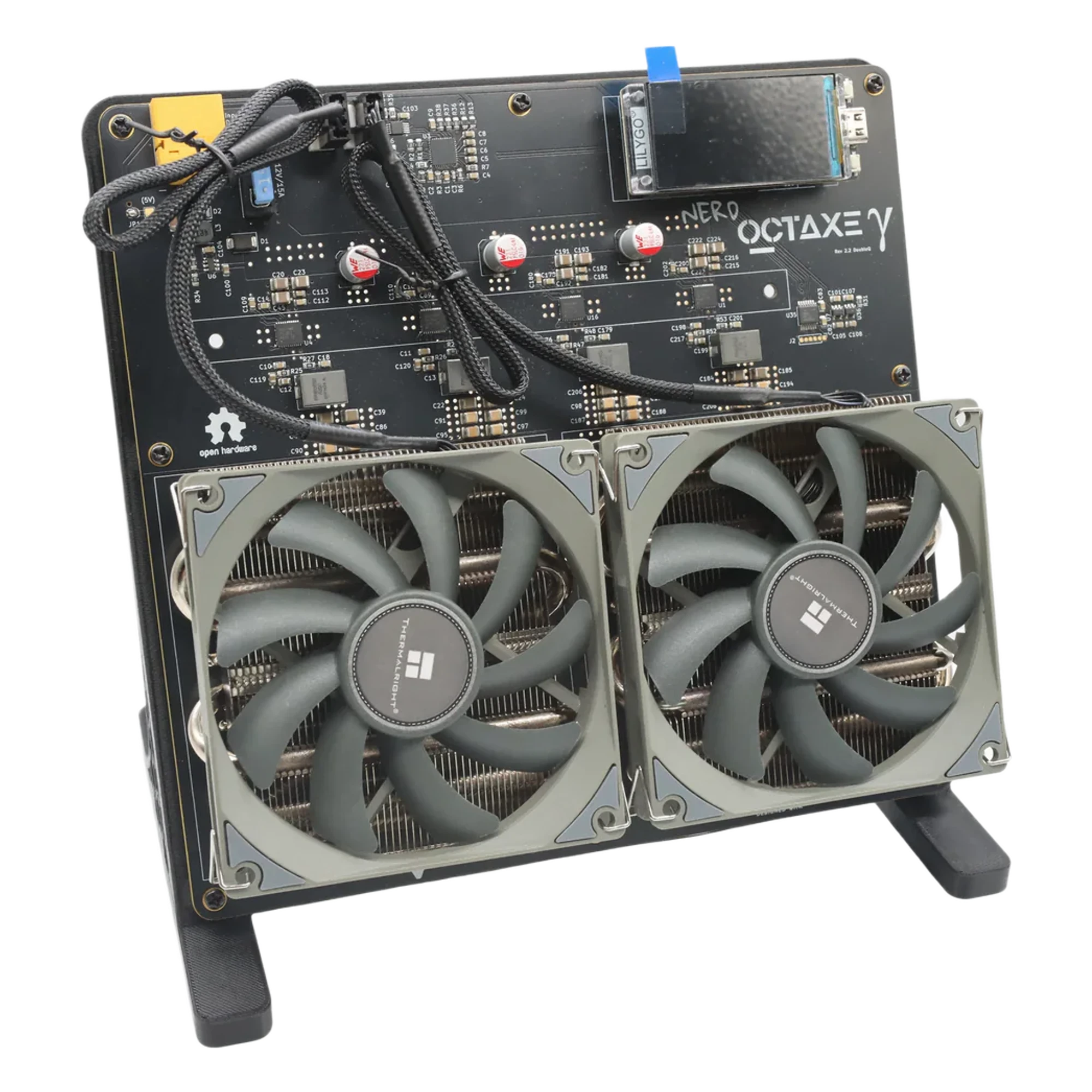
NerdMiner NerdOCTAxe Rev 3.1
SHA-256 · 12TH/s · 240W
|
1 in 1,446
Block worth $253,153
|
|
HammerMiner BC08
SHA-256 · 12TH/s · 250W
|
1 in 1,446
Block worth $253,153
|
|
NerdMiner NerdOCTAxe
SHA-256 · 9.6TH/s · 160W
|
1 in 1,807
Block worth $253,153
|
|
NerdMiner NerdQX
SHA-256 · 8TH/s · 170W
|
1 in 2,169
Block worth $253,153
|
|
HammerMiner Thor P2
SHA-256 · 6.8TH/s · 155W
|
1 in 2,551
Block worth $253,153
|
|
NerdMiner NerdQaxe++ Rev 6.1
SHA-256 · 6TH/s · 103W
|
1 in 2,892
Block worth $253,153
|
|
NerdMiner NerdQaxe++ Hydro Rev 6.1
SHA-256 · 6TH/s · 103W
|
1 in 2,892
Block worth $253,153
|
|
NerdMiner NerdQaxe++
SHA-256 · 4.8TH/s · 72W
|
1 in 3,614
Block worth $253,153
|
|
NerdMiner NerdQaxe++ Hydro
SHA-256 · 4.8TH/s · 76W
|
1 in 3,614
Block worth $253,153
|
|
HammerMiner BC04
SHA-256 · 4.8TH/s · 240W
|
1 in 3,614
Block worth $253,153
|
|
LuckyMiner Miner LV08
SHA-256 · 4.5TH/s · 120W
|
1 in 3,855
Block worth $253,153
|
|
Bitaxe Supra Hex 701
SHA-256 · 4.2TH/s · 90W
|
1 in 4,131
Block worth $253,153
|
|
Canaan Avalon Nano 3
SHA-256 · 4TH/s · 140W
|
1 in 4,337
Block worth $253,153
|
|
NerdMiner NerdQaxe+ Hyd
SHA-256 · 2.5TH/s · 60W
|
1 in 6,939
Block worth $253,153
|
|
NerdMiner NerdQaxe+
SHA-256 · 2.5TH/s · 50W
|
1 in 6,939
Block worth $253,153
|
|
Bitaxe Gamma Turbo
SHA-256 · 2.4TH/s · 35W
|
1 in 7,228
Block worth $253,153
|
|
HammerMiner Thor X1
SHA-256 · 2.1TH/s · 46W
|
1 in 8,261
Block worth $253,153
|
|
Bitaxe Gamma Duo 650
SHA-256 · 1.63TH/s · 26W
|
1 in 10,642
Block worth $253,153
|
|
Bitaxe Touch
SHA-256 · 1.6TH/s · 22W
|
1 in 10,842
Block worth $253,153
|
|
HammerMiner BC01
SHA-256 · 1.5TH/s · 23W
|
1 in 11,565
Block worth $253,153
|
|
Bitaxe Gamma 602
SHA-256 · 1.3TH/s · 15W
|
1 in 13,344
Block worth $253,153
|
|
Bitaxe Gamma 601
SHA-256 · 1.2TH/s · 17W
|
1 in 14,456
Block worth $253,153
|
|
LuckyMiner LV07 1TH/s
SHA-256 · 1TH/s · 25W
|
1 in 17,347
Block worth $253,153
|
|
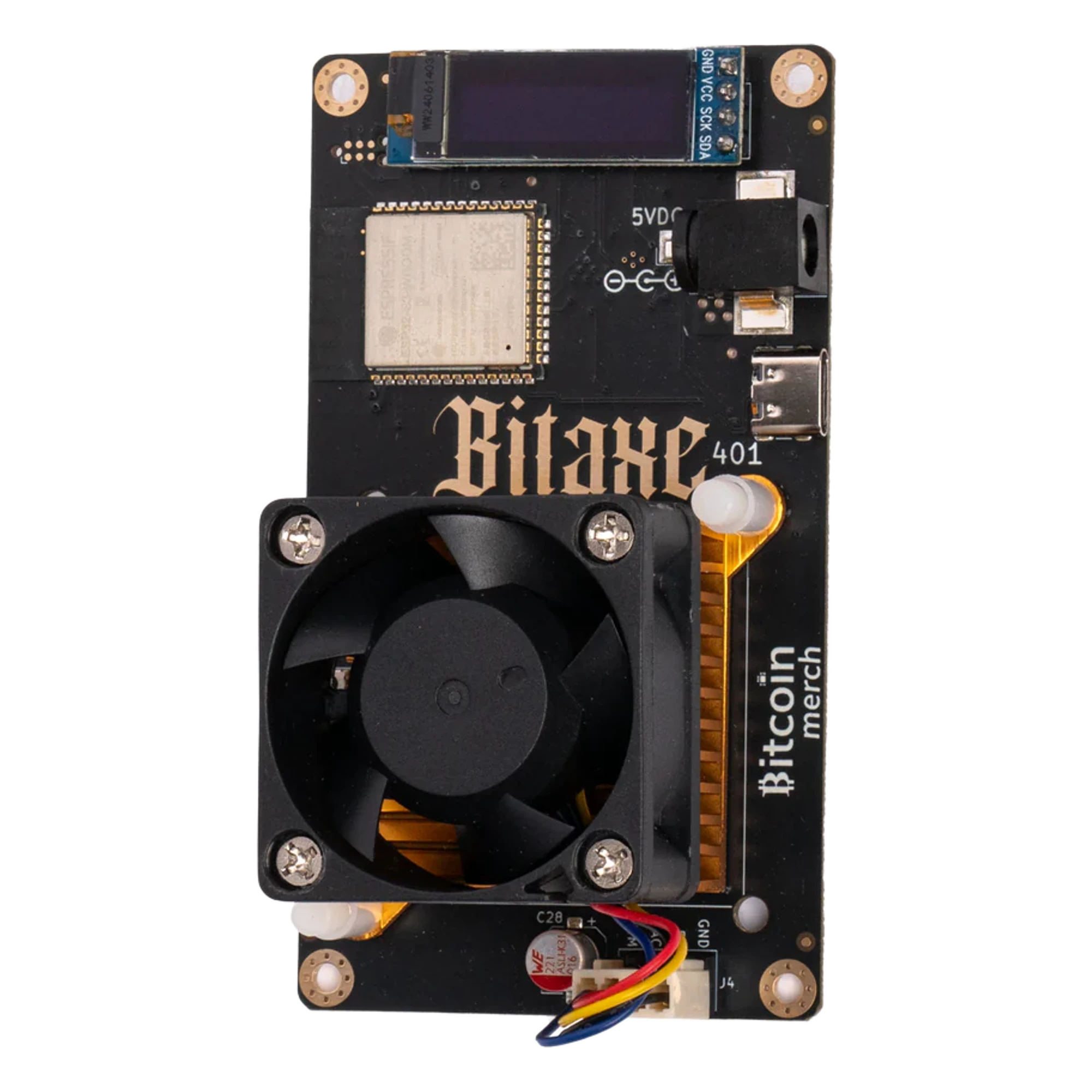
Bitaxe Supra 401
SHA-256 · 600GH/s · 14W
|
1 in 28,911
Block worth $253,153
|
|
Bitaxe Ultra 1366
SHA-256 · 425GH/s · 11W
|
1 in 40,815
Block worth $253,153
|
|
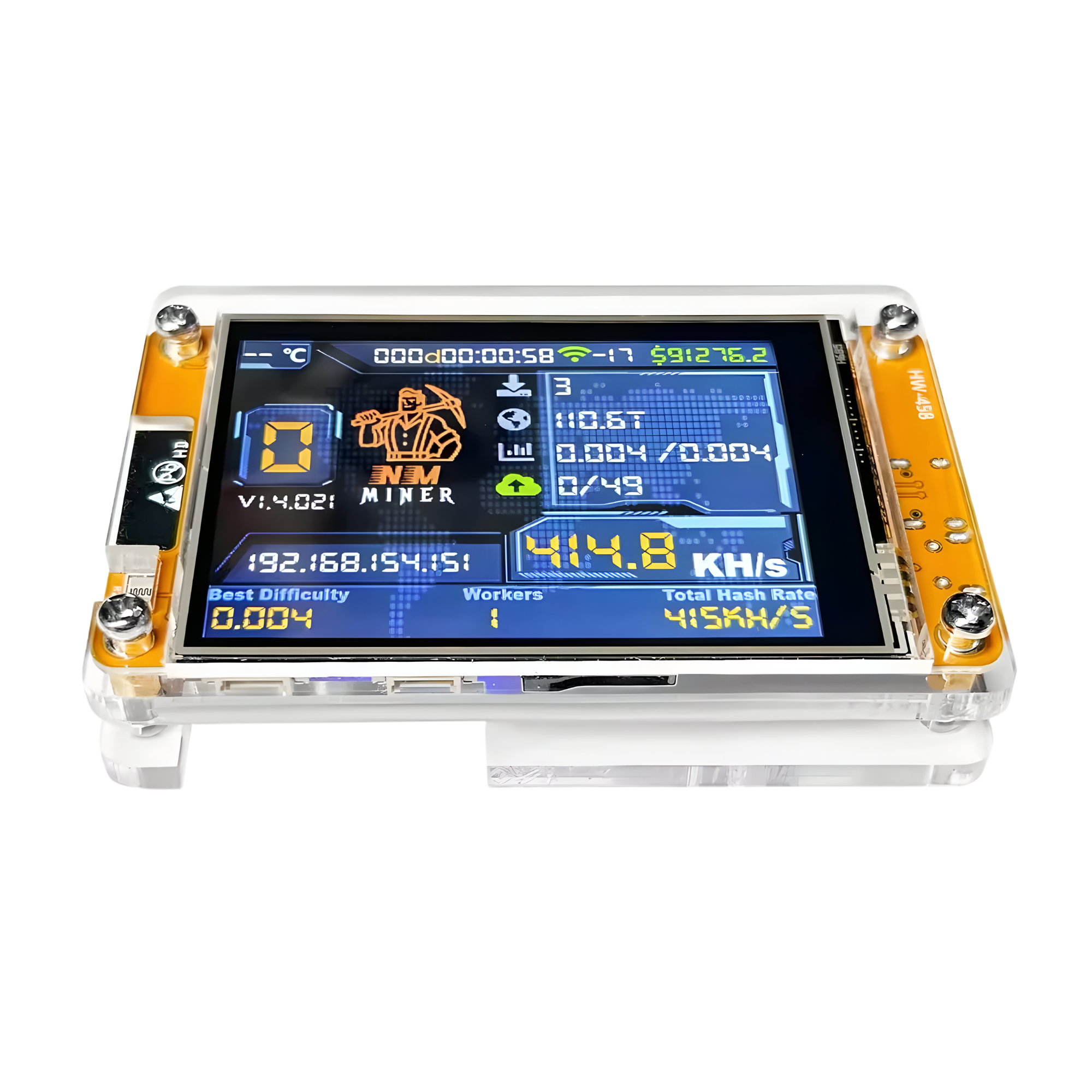
Nerdminer V3
SHA-256 · 1MH/s · 1W
|
1 in 17,346,322,254
Block worth $253,153
|
|
HammerMiner DC08
Scrypt · 440MH/s · 120W
|
3.59%
Block worth $346
|
|
HammerMiner DC06
Scrypt · 330MH/s · 120W
|
2.71%
Block worth $346
|
|
HammerMiner DC04
Scrypt · 230MH/s · 60W
|
1.89%
Block worth $346
|
|
HammerMiner DC02
Scrypt · 120MH/s · 30W
|
1 in 101
Block worth $346
|
|
PlebSource Hammer Miner Scrypt
Scrypt · 105MH/s · 25W
|
1 in 115
Block worth $346
|

– / miners
There is no daily profit column here on purpose. A lottery miner has an expected yield of effectively zero — the only honest numbers are what it costs you to run and what your odds are. If you want raw profitability maths for production hardware, use the ASIC miner profit calculator.
Best Lottery Miners Right Now
Bitcoin · SHA-256
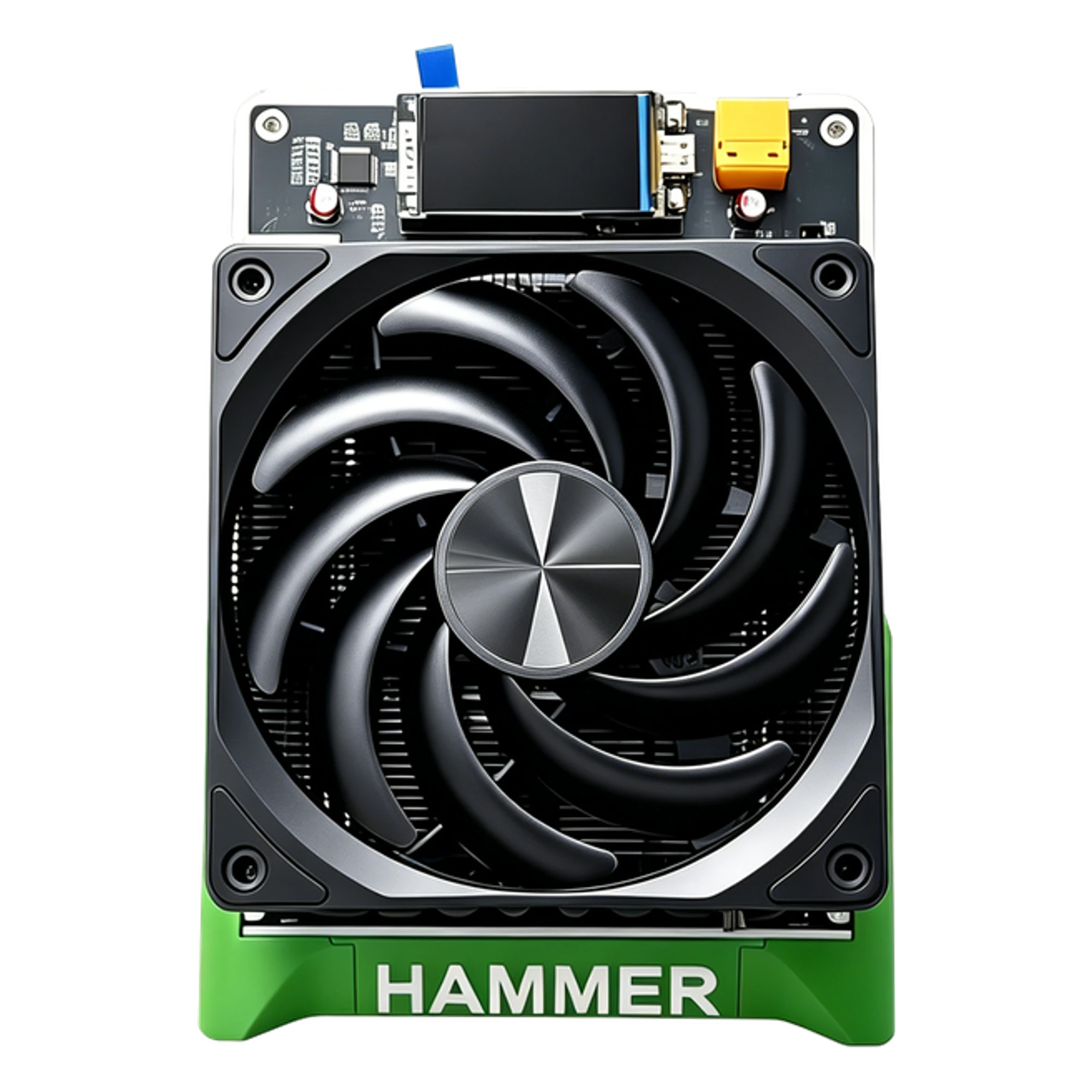
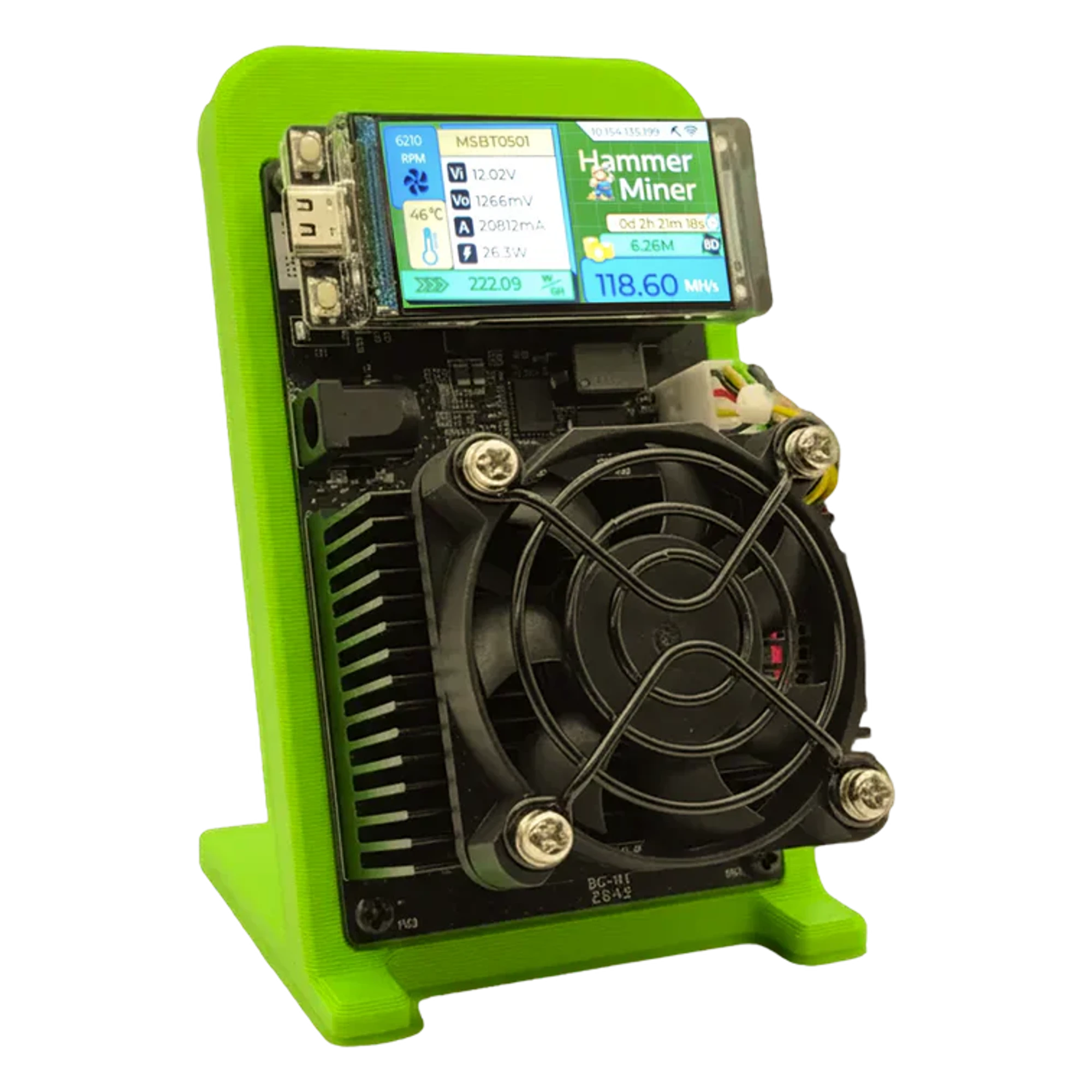
What Is Solo Lottery Mining?
No pool fee, no proportional split — and no guaranteed payout either.
Solo mining means pointing your hardware at a proof-of-work network on your own account instead of joining a pool. You build your own block template, you hash it yourself, and if you solve it the entire block reward is yours. No pool fee, no proportional split, no minimum payout threshold. It works the same way on every mineable coin — Bitcoin, Litecoin, Dogecoin, Kaspa, Monero — because the mechanism is proof of work itself, not any one chain.
The trade-off is brutal and simple. With a pool you earn a little every day. Solo, you earn nothing at all until the day you win everything. This is why the community calls it lottery mining or lucky mining: the machine is not an investment that pays back on a schedule, it is a ticket printer. Every hash it computes is one more entry in a draw that happens every block, forever.
Pool mining
- Small payouts, almost every day
- Your reward is proportional to the hashrate you contributed
- The pool takes a fee and decides which transactions go in the block
- Predictable, low variance, effectively an income stream
Solo mining
- Nothing, then nothing, then possibly everything
- A win pays the entire block subsidy plus every fee in the block
- On your own node, you choose the transactions yourself
- Maximum variance, and the only way to win a whole block
Bitcoin, Scrypt — and Everything Else
Two networks dominate the lottery miner market. The maths works on every proof-of-work coin.
Bitcoin solo mining
The original lottery. Bitaxe, NerdMiner, LuckyMiner and the Hammer Miner BC series all hash SHA-256 against the largest, most secure proof-of-work network on earth. The odds per machine are the longest of any coin — but a single block is worth more than most people earn in a year, and it lands in your own wallet with nobody in between.
Bitcoin mining calculator →Scrypt solo mining: Litecoin and Dogecoin
The newer lottery, and the one with shorter odds. Scrypt lottery miners like the Hammer Miner DC series hunt Litecoin blocks, and because Dogecoin is merged-mined on the same work, every block found pays both coins. The Litecoin network is a fraction of Bitcoin's size, blocks arrive every two and a half minutes, and the same hardware budget buys a far bigger slice of the draw.
Any proof-of-work coin can be solo mined
Bitcoin and Scrypt get the special mention because that is where dedicated lottery hardware exists today. But the mechanism is not tied to either. Point any miner at any proof-of-work network on your own account — a Kaspa ASIC, a Zcash rig, a CPU on Monero — and you are solo mining it. The odds formula is identical: your hashrate divided by the network hashrate, against that coin's live difficulty. Only the numbers change, and every coin page on this site shows them.
Browse every mineable coin →How the Odds Actually Work
Your share of the network hashrate is your share of every block draw.
Proof-of-work mining is a guessing game with a target. Every miner on the network is generating hashes and checking whether the result falls below a threshold set by the current difficulty. There is no skill, no progress bar, and no partial credit. A hash either wins or it does not, and then you throw it away and try the next one.
This gives lottery mining a property that surprises most people: your chance of winning any given block is simply your hashrate divided by the total network hashrate. That is the whole formula. If Bitcoin runs at 900 EH/s and your machine produces 1 TH/s, you hold roughly one billionth of the tickets in every draw. If Litecoin runs at 2.8 PH/s and your Scrypt miner produces 440 MH/s, you hold about one six-millionth — and the draw happens four times as often. Long odds either way, but real, calculable, and identical in kind to the odds an industrial farm holds.
Every hash is equal
The network cannot tell whether a winning hash came from a container farm or a board on your desk. There are no better tickets, only more of them.
Every attempt is independent
The chain has no memory. Years of hashing do not make you due. The block could be solved on your first day, because the first day and the ten-thousandth are statistically identical.
Difficulty sets the bar, not your luck
Every network retunes its difficulty so blocks keep landing on schedule. Your odds move with that number, which is why the chances in the table are recalculated against live data rather than published once and left to rot.
Why Lottery Mining Exploded
Home mining was dead for a decade. Open hardware brought it back.
For most of the last decade, home mining was dead. Industrial farms with megawatt substations and container-scale cooling made the economics impossible, and the hardware itself became hostile. A modern production ASIC is a three-kilowatt jet engine that nobody can live next to. Ordinary people were priced and noised out of the networks they were supposedly part of.
Open-source lottery miners reversed that. A Bitaxe or NerdMiner costs less than a phone, draws a handful of watts, sits silently on a desk, and plugs into a normal socket. Scrypt boards followed and brought Litecoin and Dogecoin into the same category. None of them will probably ever find a block. But they give their owner something an exchange account never can: a real, non-custodial, statistically genuine shot at a full block reward, and one more independent hasher validating the network.
There is a cultural half to this too. These machines are open hardware — schematics, firmware and bill of materials in public, forked and improved by the people who mine on what they built. Owning one is closer to owning a ham radio than owning a share of a mining fund. That combination of low cost, zero noise, open design and lottery upside is exactly why the category went from curiosity to movement.
What You Need to Start Solo Mining
If you can set up a wireless printer, you can set up a lottery miner.
A lottery miner for your coin
Any of the machines listed above — SHA-256 boards for Bitcoin, Scrypt boards for Litecoin and Dogecoin. Higher hashrate means more tickets per second, but every one of them is a valid entry into every draw. Buy on running cost and noise as much as on raw hashrate.
A wallet address
The reward is paid directly to it. Use a wallet whose keys you control — the entire point of solo mining is that nobody stands between you and the coinbase output.
A solo mining endpoint
Either a public solo pool, which builds block templates for you and pays the finder in full, or your own full node running a solo stratum server. Both work. Only one of them is sovereign.
Power and patience
The cost per year in the table above is what you will actually spend. Treat it as the price of the ticket rather than as an operating loss, and the whole exercise stops looking irrational.
Solo Mining on Your Own Node
A pool-hosted ticket versus a genuine vote in consensus.
Most people start on a public solo pool, and that is a perfectly good place to start. The pool assembles the block template, your miner hashes it, and if you win, the pool pays you the full reward minus a small fee. Simple, and it works out of the box.
But running your own full node with a solo stratum server is the version that actually matters. A solo miner on its own templates decides which transactions go into the block it is trying to solve. That is not a rounding error in decentralisation terms — it is the difference between renting your hashpower to someone else and being a full participant in consensus.
The honest framing: a lottery miner on a public pool is a ticket. A lottery miner on your own node is a vote. The hardware cost is identical; only the setup effort differs, and that is why the node route is worth the weekend it takes.
How to Choose a Lottery Miner
You are not optimising payback here — you are optimising tickets per watt.
Pick the coin first
The algorithm decides the network you compete in. Bitcoin offers the biggest prize and the longest odds; Scrypt offers smaller, more frequent wins paid in two coins. Decide which draw you want to be in before you compare boards, because a SHA-256 miner and a Scrypt miner are not substitutes for each other.
Hashrate is tickets
Doubling your hashrate exactly doubles your odds. Nothing else on the spec sheet moves the probability, which makes this the only number with a direct line to your chance of winning.
Efficiency is the ticket price
Efficiency decides how much electricity each ticket costs you. Two machines with the same hashrate and different efficiency give identical odds at different annual prices — and since the odds are the only upside, the cheaper one strictly wins.
Noise and heat decide whether it stays plugged in
A lottery miner only wins if it is running. The machine that lives quietly on a shelf for five years buys more tickets than the faster one you unplugged in week three because of the fan.
Realistic Expectations
Judge a lottery miner the way you would judge a lottery ticket, not a business.
You will almost certainly not find a block. That sentence belongs on this page, because a site that hides it is selling something. The overwhelmingly likely outcome of buying a lottery miner is that you pay a small electricity bill for years and win nothing at all.
And yet solo blocks keep getting found by single low-power units. It happens because the maths permits it, not because those owners did anything clever. Each of them held the same long odds as everyone else and the draw went their way. That is the deal, stated plainly, and most owners find it a perfectly good deal once nobody is pretending otherwise.
So judge a lottery miner the way you would judge a lottery ticket, not a business. What does it cost to keep running, how many tickets per second does it buy, and what does a win pay? Those are the three numbers on this page — and unlike an actual lottery, the machine you bought is also quietly making the network harder to capture the entire time it runs.
Solo Lottery Mining FAQ
Everything you need to know about solo mining odds
Mining profitability in your pocket
Every ASIC miner, GPU and coin from the site, with live profit, ROI and your own electricity rate — free, no account needed, on iOS and Android.