English
 German
 Hungarian
 Dutch
Dutch
 Spanish
 French
 Italian
 Czech
Czech
 Polish
 Greek
Greek
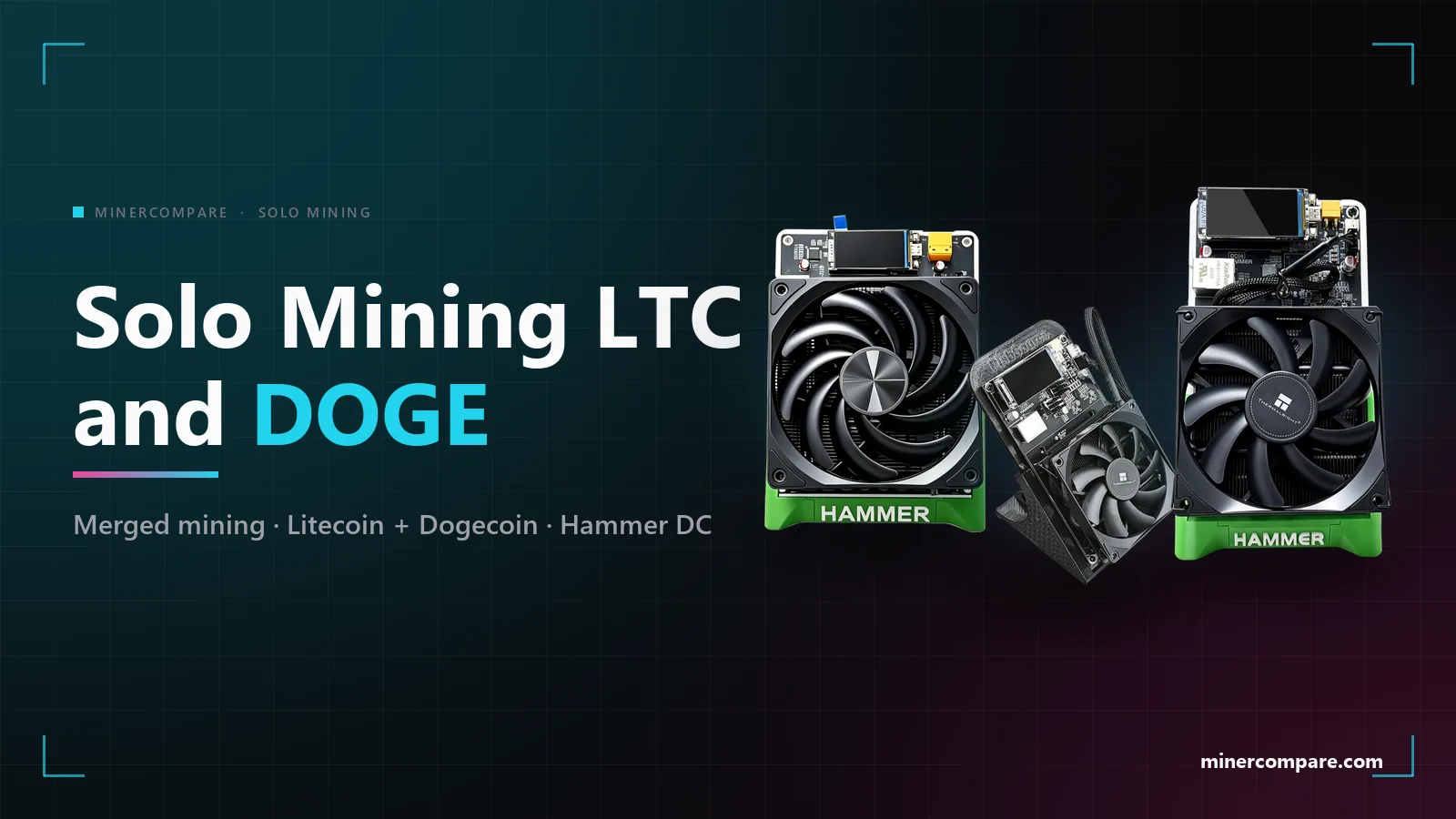
A small Scrypt ASIC can solo mine Litecoin and Dogecoin at the same time, but only if the pool lets it submit shares often enough to stay connected. This guide explains merged mining in plain words, what share difficulty and a pool's minimum difficulty floor are, why a home miner of about 100 MH/s breaks on a high floor, and which primary and backup pool settings worked in our tests as of October 2026.
How merged mining of Litecoin and Dogecoin works
Merged mining lets one hash count on two chains. Litecoin and Dogecoin both use the Scrypt algorithm, and since 2014 Dogecoin accepts Litecoin work through auxiliary proof of work, usually called AuxPoW. The pool gives your miner a Litecoin block template that also commits to a Dogecoin block, and each hash is checked against the target of both chains.
The two chains are two independent lotteries played with one ticket. A hash that clears the Dogecoin target wins a Dogecoin block, a hash that clears the Litecoin target wins a Litecoin block, and on a very lucky day one hash clears both. Because the Dogecoin target is far easier, Dogecoin blocks are the more frequent draw and Litecoin blocks are the rarer one.
The block reward on each chain is paid in that chain's own coin. For a solo miner the pool must therefore know two addresses, one for Litecoin and one for Dogecoin, and a pool that only knows the first one cannot pay you for the second.
Share difficulty and the minimum difficulty floor
A share is a small proof that your miner is working. The pool sets a share difficulty for your connection, and every hash that clears it is sent back as a share. The pool counts the shares to estimate your hashrate, and it uses the steady stream as a heartbeat to know the connection is alive.
The minimum difficulty floor is the lowest share difficulty a pool will give you. Pools built for large machines set the floor high to keep the load on their servers low. A pool with adaptive difficulty, called vardiff, starts high and lowers the target until your miner delivers a share every few seconds; a pool with a hard floor never goes below it, however small the miner is.
The share difficulty decides how often the pool hears from you. The network difficulty decides how often you win. Only the second one is the lottery.
The table shows how many hashes one share needs at each difficulty and the average wait for a miner of 100 MH/s. The waits are an average: shares arrive at random, so single gaps can be several times longer.
| Share difficulty | Hashes per share | Average time per share |
|---|---|---|
| 4,194,304 | 2.75 × 10^11 | ~46 min |
| 131,072 | 8.6 × 10^9 | ~86 s |
| 32,768 | 2.1 × 10^9 | ~21 s |
| 13,440 | 8.8 × 10^8 | ~9 s |
| 8,192 | 5.4 × 10^8 | ~5 s |
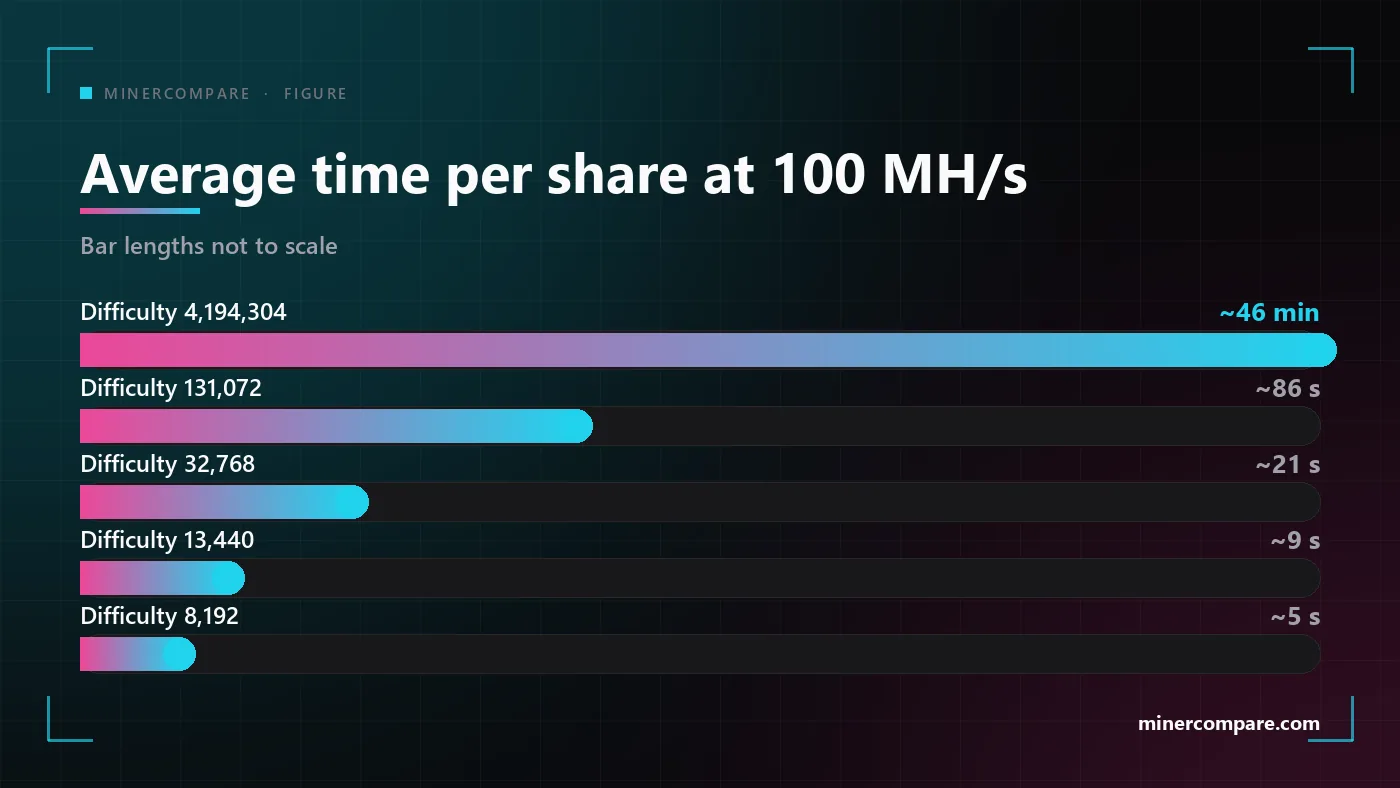
Why a 100 MH/s miner breaks on a high floor
In our tests, SoloPool.org held small Scrypt miners to a floor of 4,194,304. Its low-difficulty ports are advertised for lottery miners, but as of October 2026 the backend still enforced that floor in our tests. A Hammer Miner DC02 of about 100 MH/s needs a very large number of hashes for one share at that level, and in our tests the gaps between shares ran to hours.
A quiet connection gets closed. The pool dropped the connection after 30 minutes without a share. Even by the plain arithmetic in the table, the average wait is longer than that, so a miner of this size loses its connection again and again.
Every reconnect throws away the work in progress. A new connection means a new Stratum handshake and a new extranonce, which is the part of the nonce space the pool assigns to your miner. The miner starts its search over, so hours of hashing can end with only a handful of shares on the dashboard.
- Symptom: the worker flickers online and offline. The pool shows the worker for a short while and then drops it, over and over.
- Symptom: the dashboard hashrate is wildly wrong. With only a few shares per day, the pool's estimate swings from nothing to several times the real value.
- Cause: a floor made for bigger machines. The fix is a pool that lowers the difficulty to your miner, not a change in the miner.
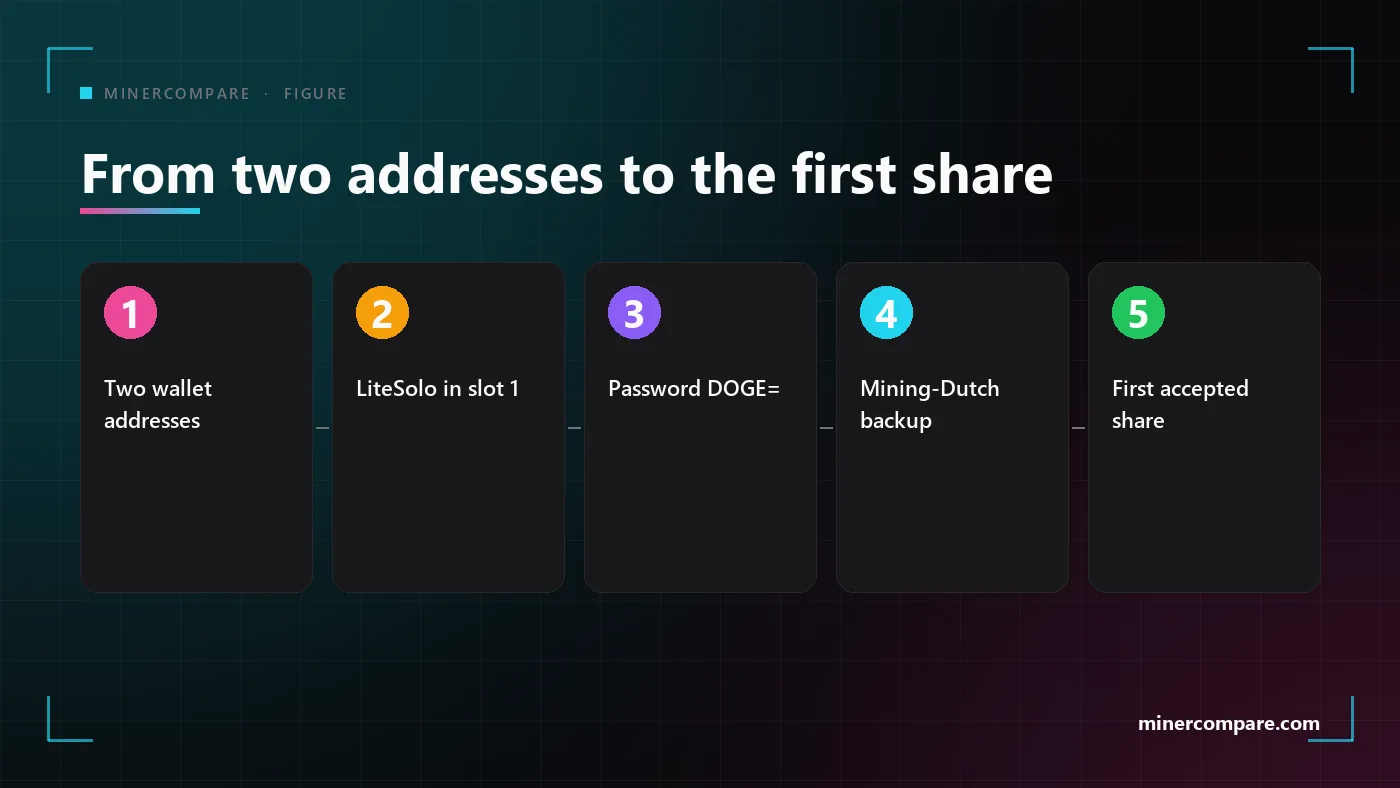
Primary pool: LiteSolo
LiteSolo is the pool we put in slot one. It uses an adaptive difficulty engine that starts at 131,072, drops to 32,768 at the first retarget and settles at 8,192 for a miner of about 100 MH/s, so a Hammer Miner submits a share every few seconds. The steady stream keeps the connection alive and the search space intact.
A found block is paid straight to your wallet. LiteSolo is non-custodial: the reward is minted to your address in the coinbase transaction, so there is no pool balance and nothing to withdraw. It takes a one percent fee from a block you find and nothing otherwise.
Enter these values in the pool slot of the miner. Use the European host if you live in Europe and the American one otherwise. Replace the two placeholders with your own Litecoin and Dogecoin addresses.
Stratum host:     eu.litesolo.org   (or us.litesolo.org)
Stratum port:     3333
Stratum user:     YOUR_LTC_ADDRESS.RIG_NAME
Stratum password: DOGE=YOUR_DOGE_ADDRESS
The pool can also fix the difficulty for you if you ask for it in the password, but the adaptive default worked for every miner in this guide, so we left it alone. litesolo.org
Backup pool: Mining-Dutch
Mining-Dutch fits small miners through a static difficulty. You set the difficulty yourself in the password, and in our tests a value of 13,440 gave a Hammer Miner a share every few seconds. It is a good second pool because it does not depend on the same server as the first one.
The trade-off is custody. Mining-Dutch credits a solo block to your internal balance on the site first, so you must withdraw it to your own wallet, by hand or by a payout threshold. That is a normal pool account, not a coinbase payout, so treat the balance as money you still have to collect.
Step 1: enter the pool in the miner
Stratum host:     europe.mining-dutch.nl   (or americas.mining-dutch.nl)
Stratum port:     8888
Stratum user:     YOUR_ACCOUNT_USERNAME.RIG_NAME
Stratum password: d=13440
Step 2: switch the worker to solo mode on the dashboard
The pool setting alone is not enough, because the account decides what the worker mines. Open the dashboard and work through the customize panel in this order.
Choose the miner group
Select the group your worker was assigned to. Do not leave it on default if the worker put itself in a named group.
Choose the coin
Select Litecoin. Merged coins such as Dogecoin are mined automatically.
Choose the mining mode
Select solo mining, then click apply settings.
Verify the status
In the workers table, the now mining column should change from the default payout scheme to Litecoin solo.
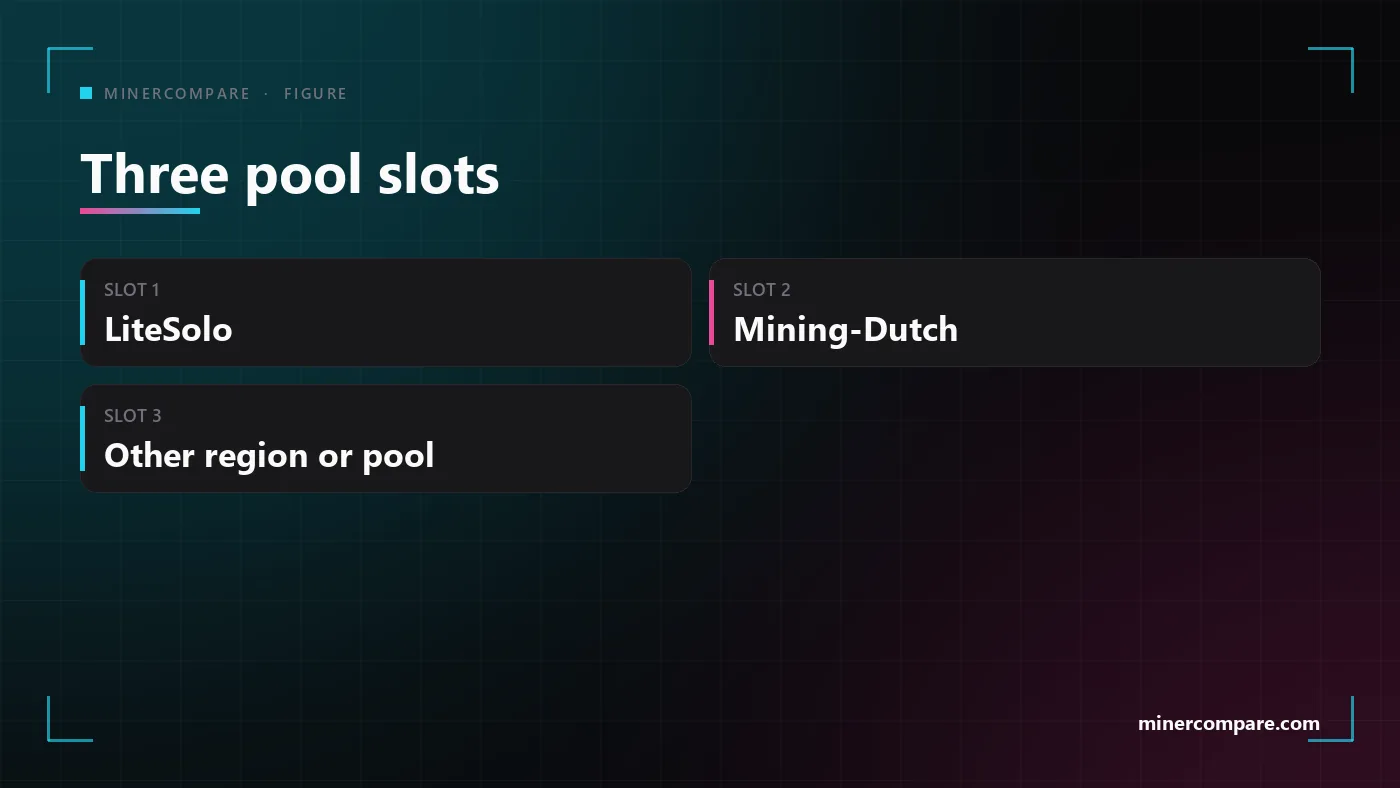
The three pool slots
Slot one is the pool you want, slot two is the one you can live with. The miner tries pool 1 first and moves to pool 2 and then pool 3 only when the one before it stops answering. Put LiteSolo in slot one, because it pays a block straight to your wallet, and Mining-Dutch in slot two, so a pool outage does not leave the miner idle.
Make the third slot different from the other two. A second copy of the same pool protects you from a dropped connection and from nothing else. Use the other region of LiteSolo, or a third pool that mines the same coin, so that a single outage cannot take all three slots down together.
Remember that a failover is also a change of pool, so a block found while the miner sits on the backup is paid by the backup's rules. That is the reason to keep the primary on a pool that pays your wallet directly.
| Slot | Pool | Host and port | Password |
|---|---|---|---|
| 1 | LiteSolo | eu.litesolo.org:3333 | DOGE=YOUR_DOGE_ADDRESS |
| 2 | Mining-Dutch | europe.mining-dutch.nl:8888 | d=13440 |
| 3 | LiteSolo (us) | us.litesolo.org:3333 | DOGE=YOUR_DOGE_ADDRESS |
Pools in general, their payout schemes and what a Stratum connection is are explained in our pools guide, which is worth a read before you commit a machine to any of them. Crypto Mining Pools · Bitcoin Mining Pools Explained: The Largest Pools, Fees and Payout Methods
Troubleshooting a merged solo setup
Most problems come down to the address, the password or the pool, and each leaves a different trace on the dashboard. Work through them in this order.
- No shares at all. Check that the host and port are exact and that the miner is on the Scrypt algorithm. A SHA-256 miner on a Scrypt pool, or the reverse, never submits a valid share.
- The worker appears and vanishes. The share difficulty is too high for the miner. Move to a pool with adaptive difficulty, or set a lower static value in the password.
- Rejected shares. A few are normal after a reconnect. A steady stream of them points to a hot miner, an unstable power supply or a wrong algorithm, so check the temperature and the supply first.
- The wrong address format. A Dogecoin address in the Litecoin field, or the other way round, can leave a block paid to nowhere you can reach. Copy both addresses from the wallet and compare the first and last characters on the dashboard.
- The Dogecoin address is missing. On LiteSolo the password must read DOGE= followed by the address. Without it you play the Litecoin lottery only, and the dashboard will not warn you.
- Mining-Dutch shows the default payout scheme. The solo switch was not applied to the right group. Repeat the dashboard steps and check the now mining column.
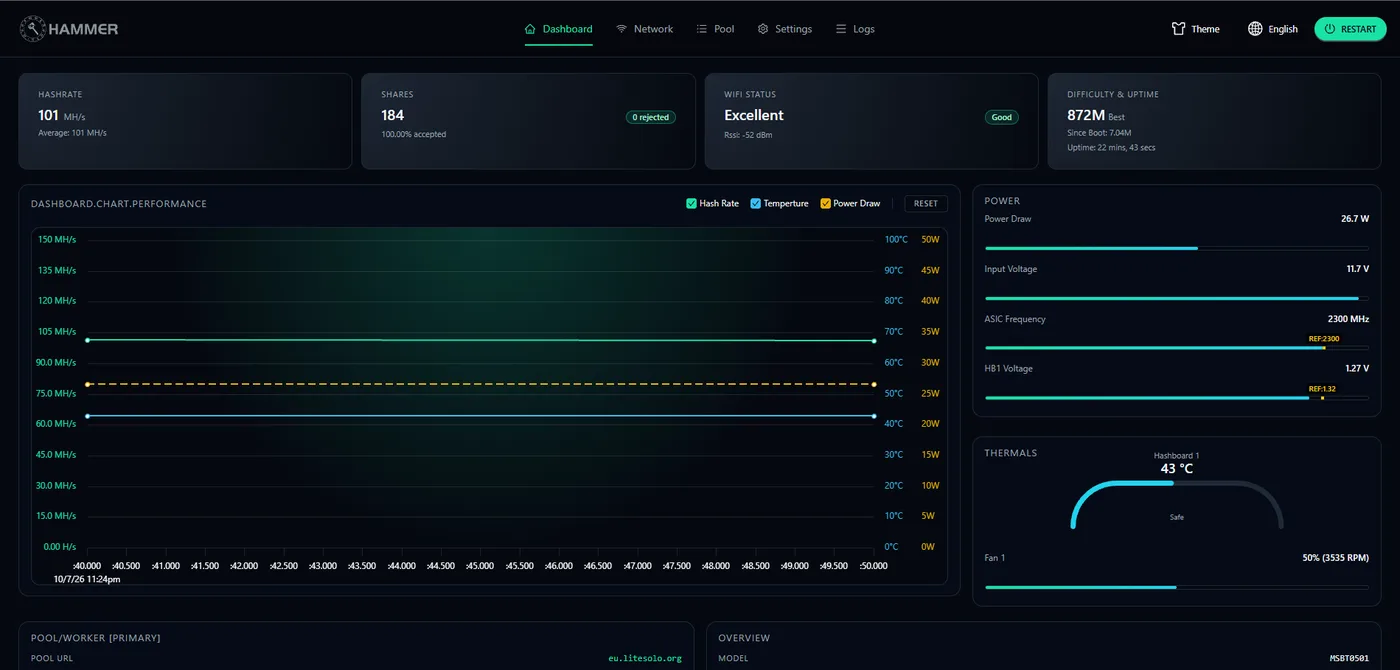
This is what a healthy connection looks like in the web interface of a Hammer Miner. The hashrate stays on one flat line, the accepted shares keep climbing with none rejected, and the pool panel shows the pool you typed in. If your screen looks like this after the first half hour, the pool settings are right.
What the block is worth in odds terms
The block is the prize, and the odds are the price of the ticket. As of October 2026 a Litecoin block pays a subsidy of 6.25 LTC and a Dogecoin block pays 10,000 DOGE, plus the transaction fees, minus the pool fee. Whether you ever see one depends on your hashrate against each network, which is a very long shot for a miner of this size.
The table below is computed when the page loads from the current network figures of Litecoin and Dogecoin, so the odds in it are today's. Each cell reads as 1 in N for the miner in the row.
| Miner | Hashrate | Power | DOGE odds per day | LTC odds per day |
|---|---|---|---|---|
| HammerMiner DC08 (440MH) | 440MH/s | 120W | 1 in 4.7K 1 in 13 / year | 1 in 10.8K 1 in 30 / year |
| HammerMiner DC06 (330MH) | 330MH/s | 120W | 1 in 6.27K 1 in 18 / year | 1 in 14.5K 1 in 40 / year |
| HammerMiner DC04 (230MH) | 230MH/s | 60W | 1 in 9K 1 in 25 / year | 1 in 20.7K 1 in 57 / year |
| HammerMiner DC02 (120MH) | 120MH/s | 30W | 1 in 17.2K 1 in 48 / year | 1 in 39.7K 1 in 109 / year |
| PlebSource Hammer Miner Scrypt (105MH) | 105MH/s | 25W | 1 in 19.7K 1 in 54 / year | 1 in 45.4K 1 in 125 / year |
On a merged-mining pool both columns apply at once to the same miner. The colour of the Litecoin column is the same daily-odds rating the solo page uses. See every solo miner with live odds →
The desk miners that fit this setup are the small HammerMiner DC boards and the PlebSource board.
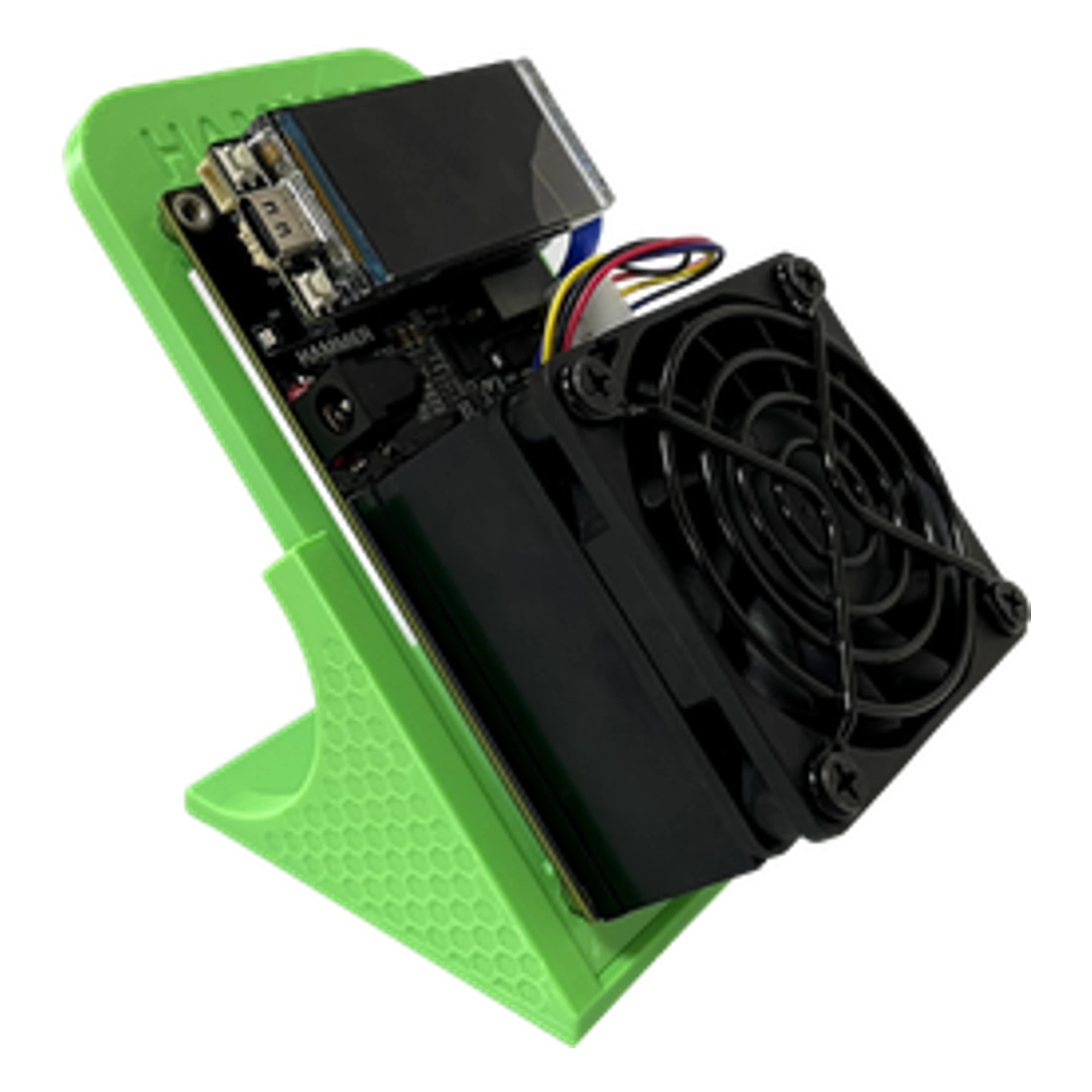 HammerMiner DC02 (120MH)
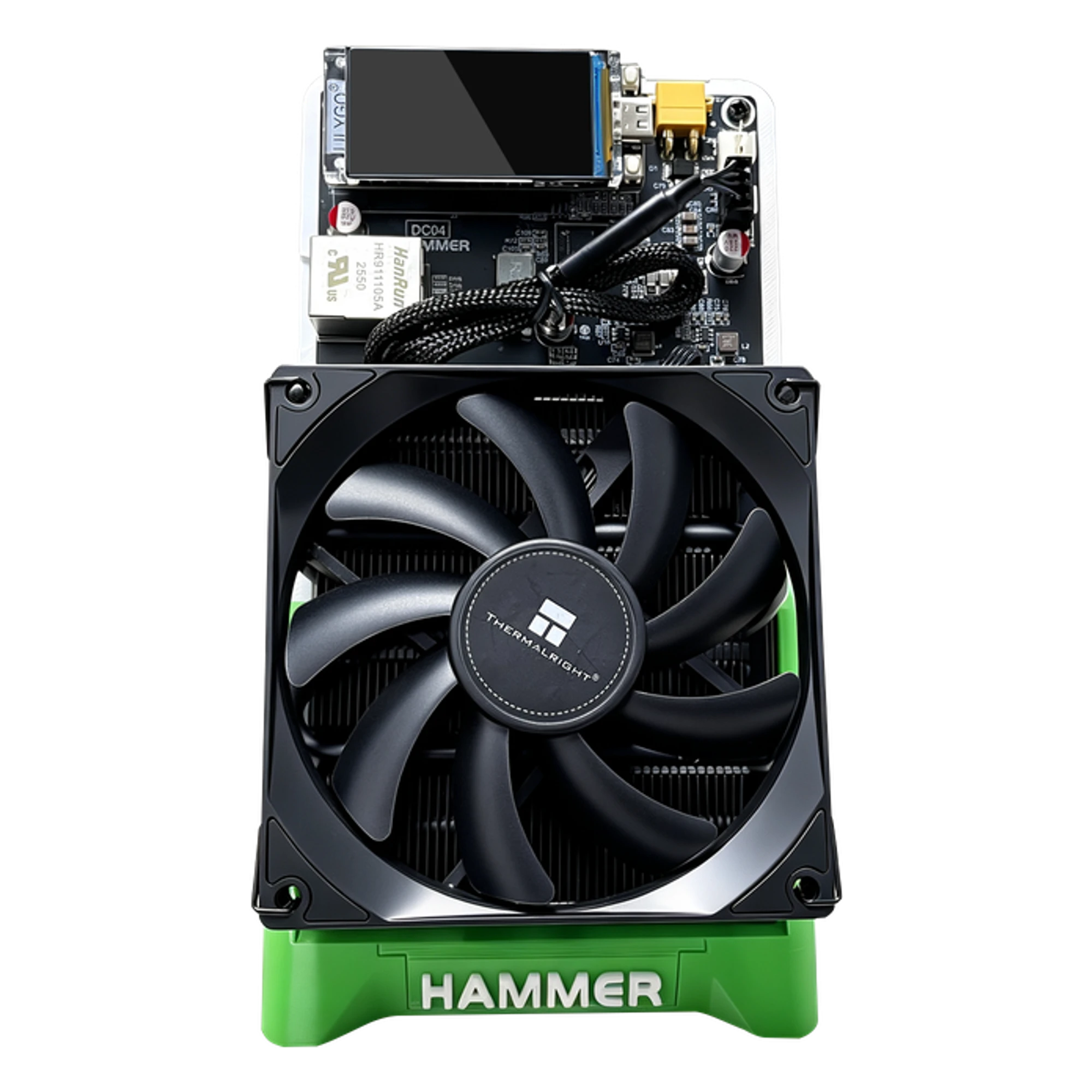 HammerMiner DC04 (230MH)
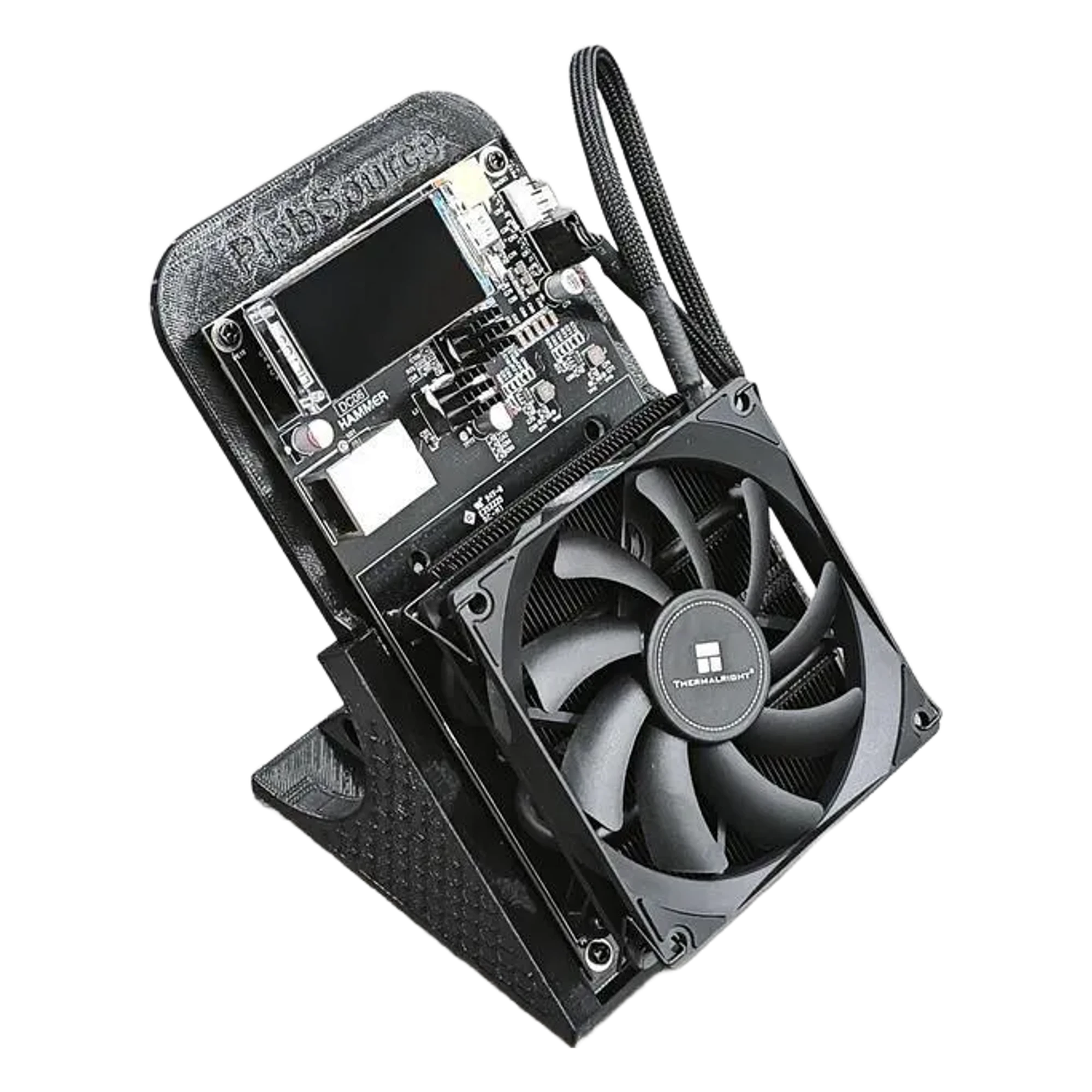 HammerMiner DC06 (330MH)
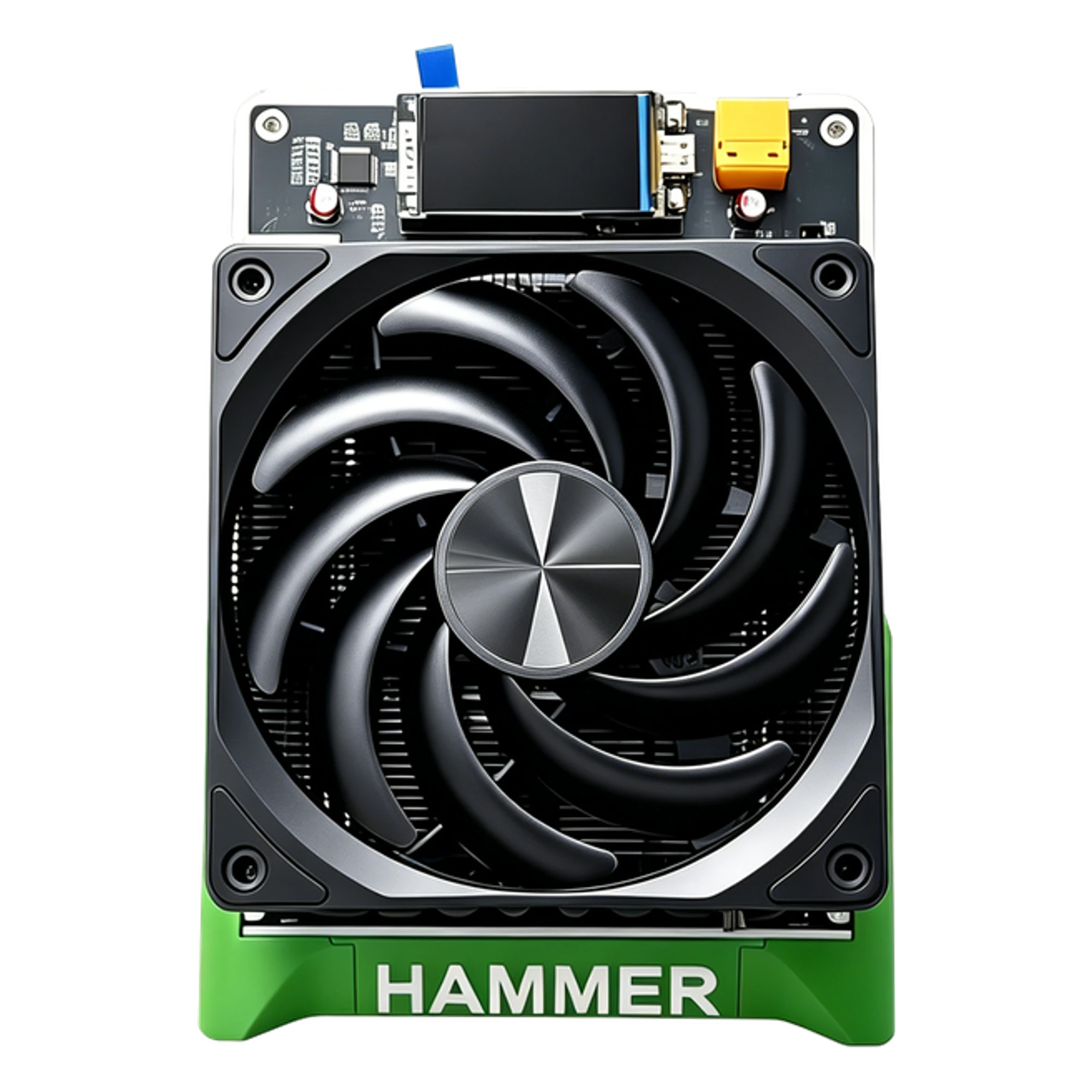 HammerMiner DC08 (440MH)
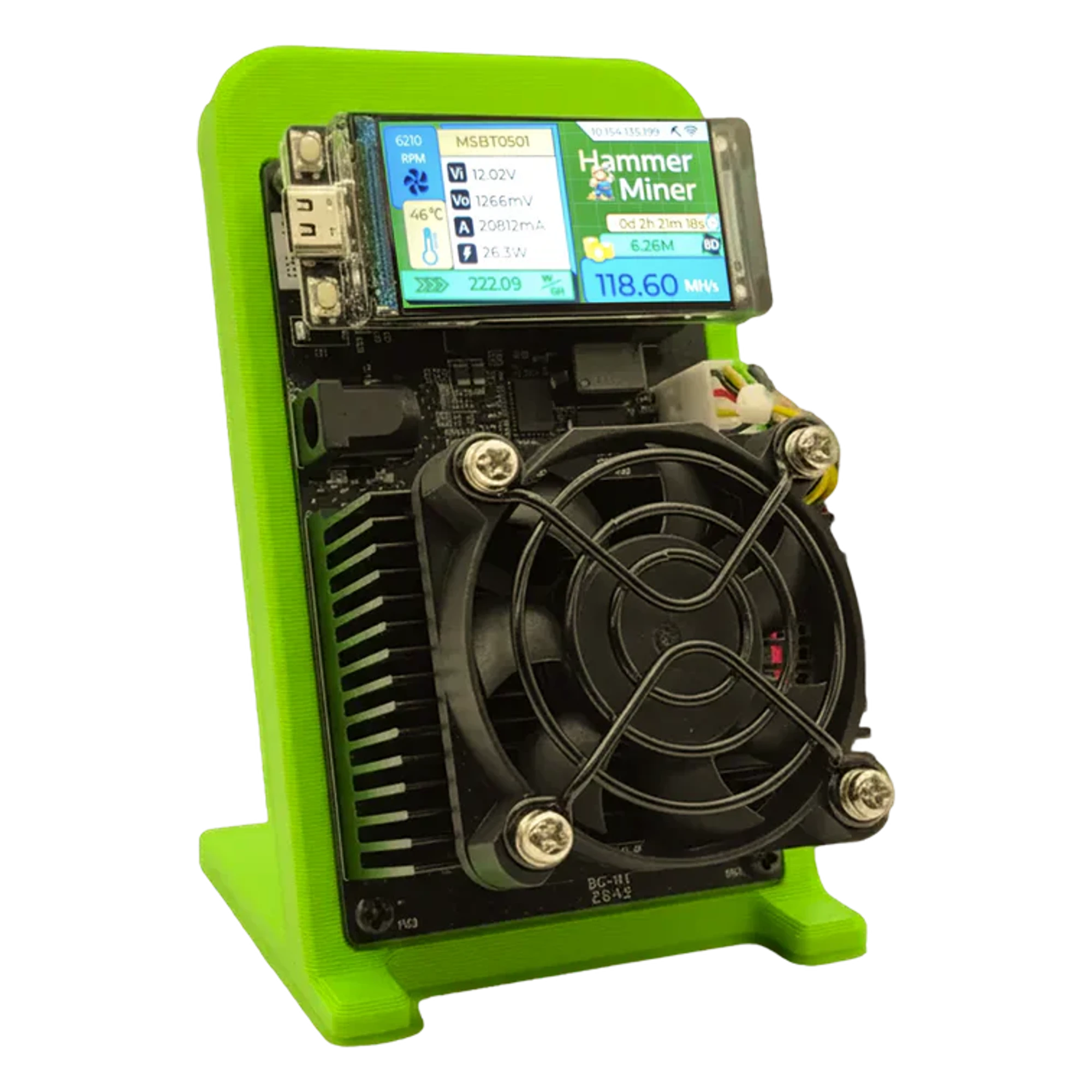 PlebSource Hammer Miner Scrypt (105MH)
The solo lottery page ranks every lottery miner by daily odds with your electricity rate applied, and the Litecoin calculator shows the live network figures behind the block value. Solo & Lottery Mining · Litecoin coin page · Dogecoin coin page
Bottom line
Choose the pool for the miner, not the miner for the pool. A solo pool with a high difficulty floor looks fine on paper and quietly breaks a 100 MH/s miner. A pool that lowers the share difficulty to match your hashrate keeps the connection alive, keeps the search space intact and keeps the dashboard honest.
Put LiteSolo in slot one with both addresses, add Mining-Dutch with a static difficulty as the backup, and keep the third slot on something different. Then leave the machine alone and check the dashboard once a week.
If you are new to solo mining, or want the same advice for the SHA-256 side, these guides come next. Solo Lottery Mining Beyond Bitcoin: BTC, BCH and LTC + DOGE Dual Solo Mining Setup Guide · How to Set Up an ASIC Miner: Power, Network, Pool and Cooling, Step by Step · Mining Guide
The solo lottery page lists every lottery miner we track for both algorithms, rated by daily block odds, with your electricity rate applied as the yearly ticket price.
See every solo miner with live odds